
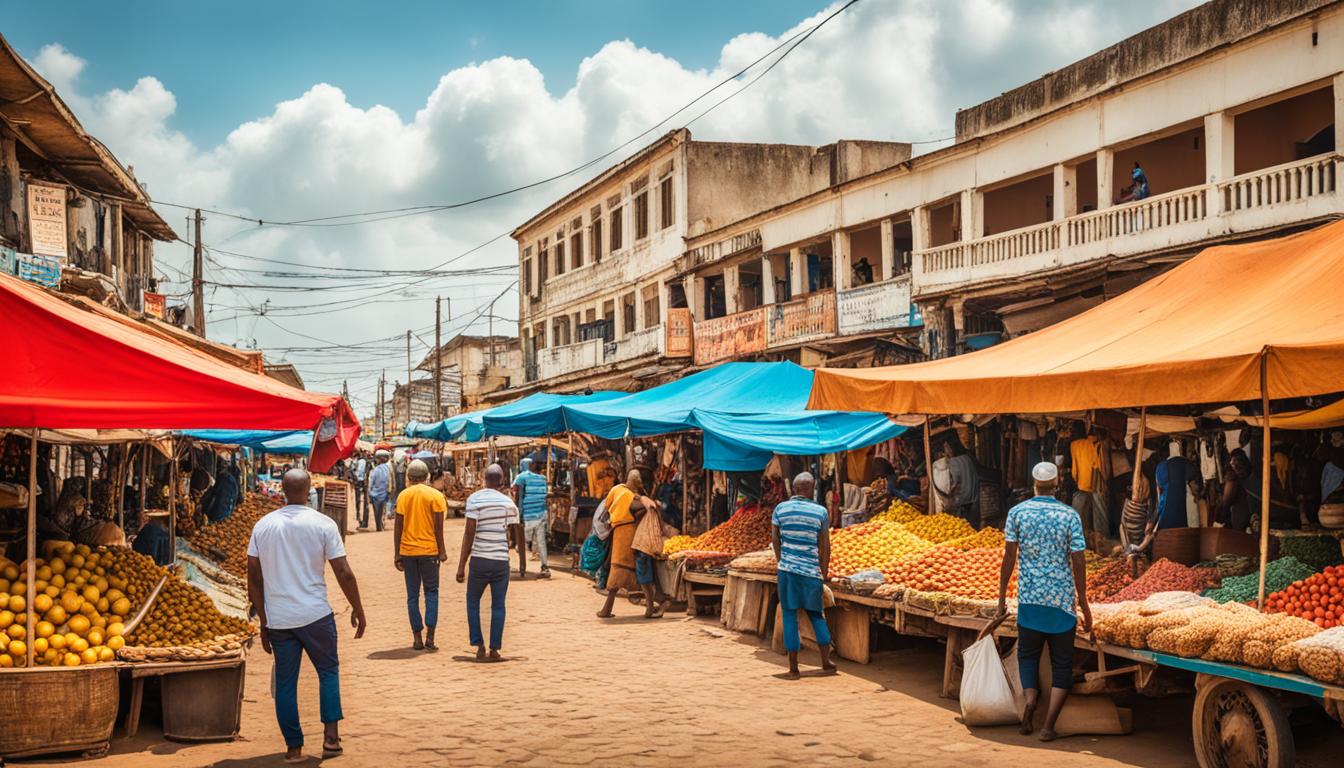
Benin: West African History Master’s Cotonou Benin

Facebook
Twitter
LinkedIn
Pinterest
Tumblr
Telegram
Benin: West African history master's Cotonou Benin
Explore Benin's rich history with a master's in West African studies at Cotonou. Delve into ancient kingdoms, slave trade, and cultural heritage. Benin: West African history master's Cotonou Benin

Did you know that Benin, a small country in West Africa, once played a pivotal role in the transatlantic slave trade, earning it the moniker “Slave Coast”? This nation, with its rich history of precolonial kingdoms and empires, is now home to a unique master’s program that delves into the fascinating past of the region. Welcome to Benin, where the study of West African history offers a profound and meaningful exploration of the continent’s storied legacies.

Key Takeaways

  • Benin, a West African nation, has a rich and complex history with precolonial kingdoms and empires.
  • The region was heavily involved in the transatlantic slave trade, earning it the nickname “Slave Coast”.
  • Benin gained independence from France in 1960 and has since had a mix of democratic governments, military coups, and military governments.
  • Cotonou, the largest city and economic capital, is home to a unique master’s program that focuses on the history of West Africa.
  • The program offers an in-depth exploration of the region’s cultural heritage, oral traditions, and the lasting impact of colonial rule.

Introduction to Benin

Nestled in the heart of West Africa, Benin is a captivating nation with a rich and diverse history. Covering an area of 114,763 square kilometers, this small country boasts a population of approximately 13 million people as of 2022. The majority of Benin’s population resides along the southern coastline of the Bight of Benin, part of the Gulf of Guinea.

Geography and Demographics

Benin’s geography is characterized by a tropical climate, with a landscape dominated by lush savannas, dense forests, and a vast network of rivers. The country’s economy is heavily dependent on agriculture, with key exports including palm oil and cotton. The diverse population of Benin is composed of various ethnic groups, including the Ewe-speaking peoples in the south and the Bariba in the north.

Historical Overview

Historically, Benin has comprised a variety of independent states and ethnicities. The most powerful precolonial state was the Kingdom of Dahomey, which rose to prominence in the 17th and 18th centuries. Benin’s rich history has been shaped by the influence of various empires, kingdoms, and colonial powers, each leaving an indelible mark on the country’s cultural and political landscape.

Precolonial Kingdoms and Empires

Before the arrival of European colonizers, the region that is now Benin was home to several powerful precolonial kingdoms and empires. Among the most prominent was the Kingdom of Dahomey, which rose to prominence in the 17th and 18th centuries. Consisting primarily of the Fon people, the Kingdom of Dahomey conquered the coastal cities of Allada and Whydah, becoming a major supplier of slaves for the transatlantic trade and earning the nickname “Black Sparta” for its emphasis on military preparation and achievement.

The Kingdom of Dahomey

The Kingdom of Dahomey was a formidable force, rivaling the Oyo Empire and the city-state of Porto-Novo in the region. Under the rule of a succession of powerful kings, Dahomey expanded its territory and solidified its position as a key player in the slave trade. The kingdom’s military prowess and hierarchical social structure were hallmarks of its success during this precolonial period.

The Yoruba Influence

Alongside the Kingdom of Dahomey, the Yoruba people also had a significant influence in the region that is now Benin. Elements of Yoruba culture and beliefs can be found in the “voodoo” religion that is practiced in Haiti and other parts of the New World, a testament to the lasting impact of precolonial Benin on the broader African diaspora.

The Slave Trade and Its Impact

The region that is now Benin, once known as the “Slave Coast,” played a significant role in the transatlantic slave trade. During this dark period in history, the Portuguese, Dutch, English, and French all established trading posts and factories in the area, with the port of Ouidah becoming a major center for the slave trade.

By the 1780s, an estimated 102,000 people were being exported from the Slave Coast region per decade, though this number declined to 24,000 per decade by the 1860s as various countries banned the slave trade. The impact of the transatlantic slave trade on the population and society of Benin, or the Slave Coast region, was significant and deleterious.

The high volume of people sold and trafficked to the Americas during this period had a profound effect on the demographic and social landscape of the region. The loss of a substantial portion of the population, particularly young and able-bodied individuals, disrupted the balance of communities and contributed to the destabilization of local economies and power structures.

Colonial Rule and the Scramble for Africa

The French presence in Benin, formerly known as Dahomey, dates back to the 17th century. They established trading posts and factories along the coast, gradually expanding their influence in the region. In the late 19th century, the French sought to solidify their control, leading to conflicts with the powerful Kingdom of Dahomey.

French Colonization of Dahomey

In 1892-1894, the French launched a military campaign and invaded Dahomey, deposing King Behanzin and turning the kingdom into a French protectorate. The French also negotiated treaties with other kingdoms, such as Nikki, to establish their sphere of influence in the area. This was part of the broader scramble for Africa among European powers during the late 19th century.

Dahomey became part of the larger French West Africa colonial federation, which included several territories in the region. The French ruled Dahomey until the country gained independence in 1960, marking the end of French colonization in Benin.

scramble for Africa Benin

The Fight for Independence

Benin, formerly known as Dahomey, embarked on its journey towards independence from France in the mid-20th century. After gaining autonomous status in 1958, the country finally achieved full independence on August 1, 1960, a date that is now celebrated as a national holiday in Benin. The path to independence was marked by a complex political landscape, with coups, regime changes, and the dominance of influential figures like Hubert Maga, Sourou Apithy, and Justin Ahomadégbé.

In 1972, Lt. Col. Mathieu Kérékou seized power and established a Marxist–Leninist state called the People’s Republic of Benin, which lasted until 1990 when it was replaced by the multi-party Republic of Benin. This period of decolonization in West Africa was a significant milestone in the region’s history, as countries like Benin (formerly Dahomey) fought for their independence from colonial powers like France.

The struggle for Benin’s independence from France was a testament to the resilience and determination of its people. This pivotal moment in Benin’s history paved the way for the country’s present-day political and economic landscape, shaping its role as a key player in the decolonization of West Africa.

Benin: West African History Master’s Cotonou Benin

For those seeking to deepen their knowledge of West African history and culture, the Continents States University in Missouri offers a unique Master’s degree program. This program focuses on the rich heritage of Benin, a country that has played a significant role in the region’s complex past.

Continents International University

Accredited in the United States, the Continents States University is a pioneering institution that provides affordable access to online education. Through its innovative membership-based tuition model, the university delivers a competency-based curriculum, enabling students to learn at their own pace and gain practical expertise in their field of study.

Program Overview

The Master’s degree in West African history at the Continents States University is designed to immerse students in the captivating story of Benin and its neighbors. Led by experienced faculty, the program offers a comprehensive exploration of the region’s precolonial kingdoms, the impact of the slave trade, and the complex process of decolonization. Students will also have the opportunity to engage in research and gain insights into Benin’s cultural heritage and contemporary sociopolitical landscape.

By earning this Master’s degree, graduates will be well-positioned to pursue careers in academia, international organizations, or to contribute to the preservation and understanding of Benin’s rich history and its significance in the broader context of West African studies.

Continents States University

Cultural Heritage and Oral Traditions

Benin, a West African nation, boasts a rich and diverse cultural heritage that has been shaped by the Fon, Yoruba, and other ethnic groups. The country’s oral traditions, including captivating folktales, thought-provoking proverbs, and profound spiritual beliefs, play a crucial role in preserving and transmitting Benin’s history and identity. The Yoruba culture, which has a significant presence in Benin, has left an indelible mark, with elements of its traditions and deities incorporated into the region’s “voodoo” religion and the broader African diaspora.

The Benin cultural heritage is a tapestry woven with the vibrant threads of its oral traditions. Folktales, passed down through generations, serve as windows into the nation’s past, illuminating the values, customs, and beliefs that have sustained the Beninese people. Proverbs, often poetic and metaphorical, encapsulate the wisdom and life lessons cherished by the various ethnic groups, providing a glimpse into the Yoruba culture Benin has embraced.

Spiritual beliefs, rooted in the Yoruba and other African traditions, have also left an indelible mark on Benin’s cultural heritage. The “voodoo” religion, with its intricate rituals and reverence for ancestral spirits, is a testament to the enduring influence of Benin’s oral traditions. This rich tapestry of cultural heritage continues to captivate and inspire the people of Benin, preserving their unique identity and connection to their past.

Cotonou: The Economic Capital

Cotonou, the largest city and economic capital of Benin, is a vibrant hub of business, commerce, and transportation. Located on the southern coast of the country, Cotonou’s strategic position and well-developed infrastructure make it a crucial economic center for Benin and the surrounding region.

Attractions and Landmarks

Cotonou Benin is home to a wealth of attractions and landmarks that showcase the city’s rich cultural heritage. One of the most notable is the Marché Dantokpa, one of the largest markets in West Africa, where visitors can immerse themselves in the bustling energy of local trade and commerce. The Fondation Zinsou art museum is another must-see, featuring a diverse collection of contemporary African art. The Basilica of the Immaculate Conception, a significant Catholic church, is also a prominent landmark in the city.

Cotonou attractions

Beyond its economic significance, Cotonou Benin offers a glimpse into the vibrant culture and history of the region. From the lively markets to the impressive architectural landmarks, the city’s attractions are sure to captivate and inspire visitors to the Benin economic capital.

Contemporary Benin

Since its transition to a multi-party republic in 1991, Benin has maintained a relatively stable democratic system, with a presidential form of government. The country’s Benin political landscape features a mix of democratic and military influences, as evidenced by the past coups and regime changes.

Benin Economic Landscape

Economically, Benin’s economy is heavily dependent on agriculture, with key exports including cotton and palm oil. The country has also sought to diversify its economy, with efforts to develop the service and industrial sectors. However, Benin continues to face challenges, such as high levels of inequality and a need for further economic development and job creation.

Despite these challenges, Benin has made significant strides in its Benin political landscape and Benin economic landscape in recent years. The country’s overall progress in the contemporary Benin era has been a testament to its resilience and commitment to democratic values.

Opportunities for Research and Study

Benin’s rich history, diverse cultural heritage, and strategic location in West Africa make it an attractive destination for academic research opportunities Benin and study Benin. Continents International University’s master’s program in West African studies Cotonou offers students the chance to delve into the region’s past and present, exploring topics such as precolonial kingdoms, the transatlantic slave trade, colonial legacies, and contemporary political and economic developments.

Beyond the university’s offerings, Benin’s institutions and research centers provide avenues for scholars to contribute to the understanding of the country’s history, cultural traditions, and socio-economic challenges. From uncovering the legacies of Benin’s precolonial kingdoms to analyzing the impact of the slave trade, the opportunities for in-depth research opportunities Benin and study Benin are vast and varied.

Whether you’re a student seeking to immerse yourself in the fascinating world of West African history and culture, or a researcher looking to expand the boundaries of knowledge, Benin’s academic landscape offers a rich and rewarding experience. With its blend of historical significance and contemporary relevance, the country stands out as a prime destination for West African studies Cotonou.

research opportunities Benin

Conclusion

Benin’s rich history, diverse cultural heritage, and strategic importance in West Africa make it a captivating subject of study and research. From the precolonial kingdoms and empires, such as the Kingdom of Dahomey and the Yoruba influence, to the legacy of the transatlantic slave trade, Benin’s past has shaped its present and continues to influence its future. Continents International University’s master’s program in West African studies, based in Cotonou, provides an invaluable opportunity for students to immerse themselves in the country’s history and culture, while also exploring contemporary political and economic challenges.

Benin’s universities and research institutions further contribute to the understanding of this dynamic and fascinating nation. The nation’s universities, such as the University of Abomey-Calavi, not only offer educational opportunities but also serve as hubs for groundbreaking research on Benin’s history, culture, and development. This ongoing academic pursuit helps to shed light on Benin’s unique position in the region and its potential for continued growth and progress.

As Benin continues to evolve, the study of its history, culture, and education remains a critical component in understanding the broader narratives of West Africa. Continents International University’s master’s program, along with the wealth of knowledge and expertise housed within Benin’s academic institutions, provides an invaluable platform for scholars, students, and researchers to engage with this captivating country and its rich heritage.

Source Links

Related Posts
Press Release

Continents International University Announces Affiliation with The Institute of Certified Professional Managers (ICPM)

January 18, 2025 – St. Louis, Missouri Continents International University is proud to announce its new affiliation with The Institute of Certified Professional Managers (ICPM), a globally recognized organization that offers the prestigious Certified Manager (CM) and Certified Supervisor (CS) certifications. This partnership aligns with the university’s mission to provide accessible, affordable, and high-quality education that prepares students for leadership and career advancement. Through this affiliation, students and graduates of Continents International University now have the opportunity to enhance their managerial and supervisory credentials by pursuing ICPM certifications. These certifications validate professional competencies and are highly regarded in the business and management fields. The Certified Manager (CM) certification is designed for professionals seeking to showcase advanced managerial knowledge and skills, while the Certified Supervisor (CS) certification focuses on building foundational supervisory skills essential for leadership roles. ICPM certifications enhance managerial and supervisory expertise, improve on-the-job performance, and provide a competitive edge for job placement and career advancement. By leveraging the quality education offered by Continents International University, students can now seamlessly transition into the certification process with ICPM. This affiliation empowers students to stand out in the global job market and demonstrates the university’s commitment to fostering lifelong learning and professional growth. Dr. Ricky Madison, President of Continents International University, stated, “We are thrilled to collaborate with ICPM to provide our students and alumni with pathways to professional certifications. These certifications complement our academic programs and enhance the career prospects of our learners.” For more information about how students can apply for ICPM certifications, please visit Continents International University website or ICPM webpage. About Continents International UniversityContinents International University is a fully licensed American institution, based in St. Louis, Missouri. Institutionally accredited and currently member with candidate for accreditation by the International Accreditation Council for Business Education (IACBE) and is committed to providing high-quality, affordable education to students worldwide. Offering flexible online programs, the university operates on a unique, one-time membership fee model, making higher education more accessible and affordable for all. About ICPMThe Institute of Certified Professional Managers (ICPM) is a globally recognized American certifying organization committed to enhancing managerial and supervisory excellence through its CM and CS certification programs. The Institute of Certified Professional Managers is a business center of the College of Business at James Madison University in Harrisonburg, Virginia.

Read More
University Enrollment

How To Choose The Right MiniMaster Course At Continents International University

Choose The Right MiniMaster Course Choosing the perfect MiniMaster program at Continents International University can seem overwhelming, but with the right approach, you can confidently select a course that aligns with your career goals and personal interests. This guide will help you navigate the decision-making process to find the best fit for your aspirations. Identify Your Career Goals Your career goals are a crucial starting point. If you’re aiming for success in business management, the MiniMaster in Business Management is an excellent choice. Those passionate about leadership should explore the MiniMaster in Global Leadership. For healthcare enthusiasts, the MiniMaster in Medical Administration provides specialized training. Aligning your program choice with your career goals ensures maximum relevance to your professional journey. Consider Your Interests and Strengths Pursuing a course that matches your interests and strengths makes learning more enjoyable and impactful. If you’re drawn to medical administration, enrolling in the MiniMaster in Medical Administration will provide a fulfilling and tailored academic experience. By choosing programs that resonate with your passions, you’ll excel academically and stand out in the job market. Evaluate the Curriculum and Resources Take a close look at the course curriculum to understand the structure and learning outcomes. Programs with practical, project-based learning, like those at Continents International University, are ideal for hands-on learners. Ensure the faculty, learning tools, and networking opportunities are top-notch to gain a well-rounded educational experience. Flexibility and Accessibility The MiniMaster programs at Continents International University offer flexible schedules, allowing busy professionals to balance education, work, and personal commitments. The availability of online learning options ensures accessibility, while in-person settings cater to students seeking a more interactive environment. Gain Insights from Alumni and Students Engage with alumni and current students to learn about their experiences. Their insights can help set realistic expectations and demonstrate how the program has impacted their careers. Additionally, networking during this process could lead to valuable professional connections. Why Choose Continents International University? Continents International University is recognized for its affordable fees and globally respected programs. For those seeking advanced degrees, consider our offerings like the Master of Science in Business Administration or the Master of Arts in Organizational Leadership. Our innovative MiniMaster programs can be your stepping stone to long-term career success. External Resources for Decision-Making Explore global online courses Access diverse educational programs Research salary trends by education

Read More