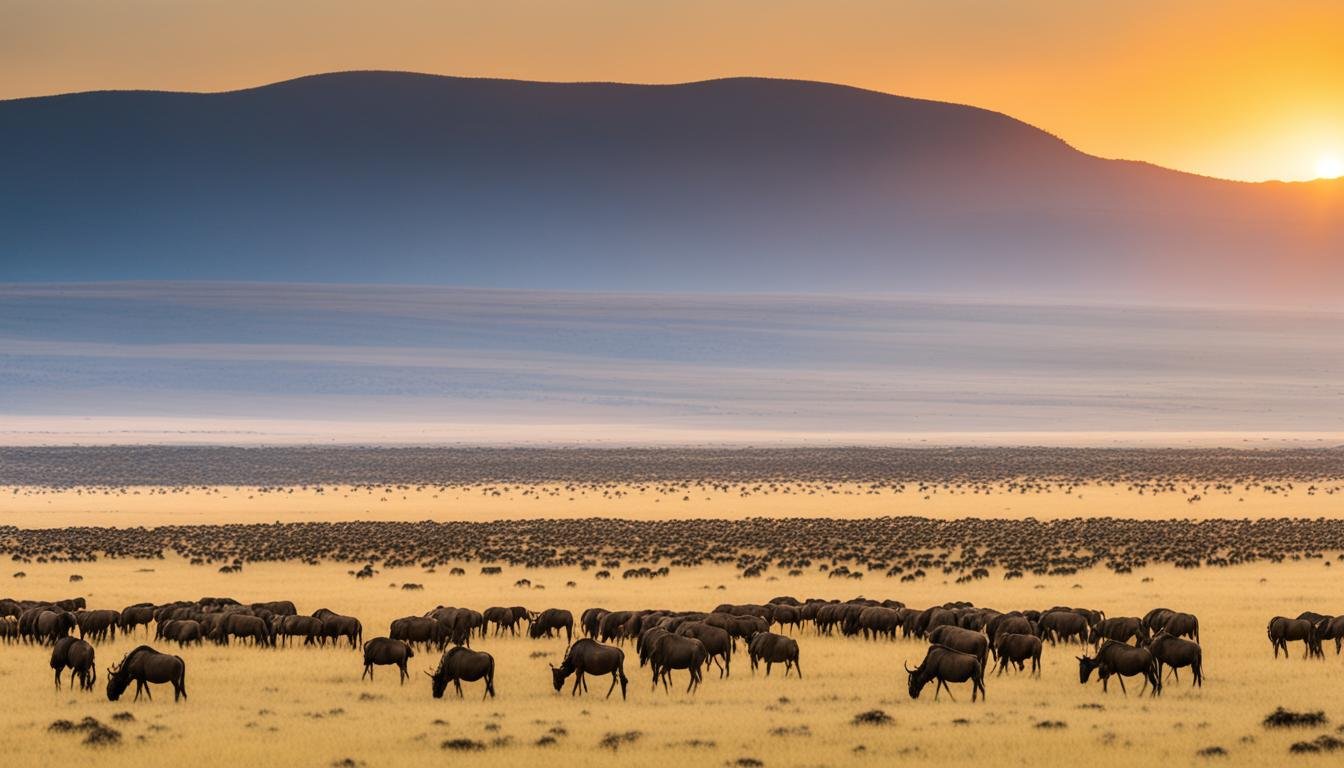
The Serengeti in Tanzania is one of the most studied ecosystems in the world. The Great Migration, in which wildebeest, zebras, and gazelles move across the plains with the rains, supports lions, hyenas, and other predators. The park and its surroundings are a living laboratory for ecology.
Systematic wildlife research here began in the 1950s with the German zoologist Bernhard Grzimek. His survey work led to the founding of the Serengeti Research Institute in 1962, which later became part of the Tanzania Wildlife Research Institute (TAWIRI). Decades of studies from this work have shaped conservation policy in Tanzania and beyond.
Research in the Serengeti covers animal behavior, population dynamics, disease, and the effects of climate and human activity. Permits run through TAWIRI and the Tanzanian authorities. The University of Dar es Salaam is also involved in regional research.
Students of wildlife biology or ecology should look for programs with real field components. Related guides include the wildlife biology master in Missoula, lemur conservation in Madagascar, and mountain ecology in Tajikistan.
Careers include research, park management, and conservation NGOs. Field skills, statistics, and grant writing all matter.