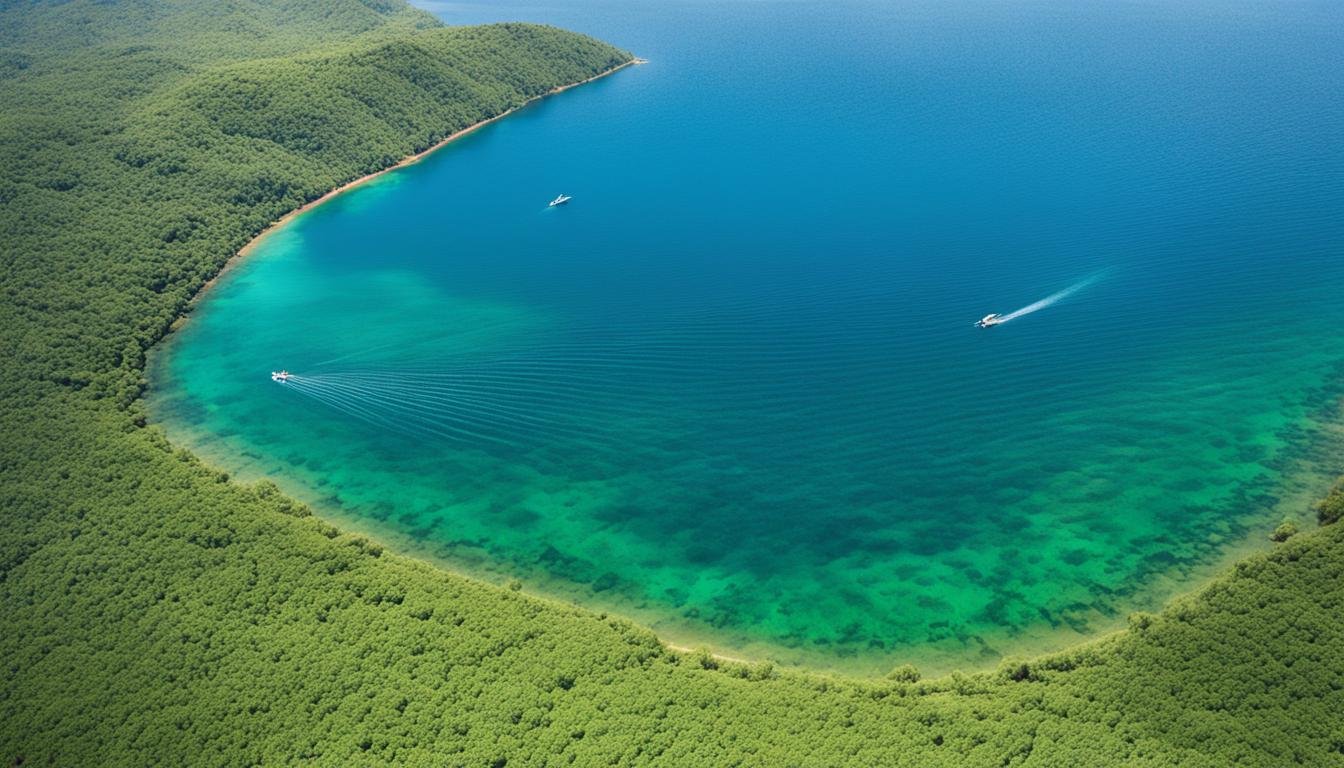
Lake Malawi is one of Africa’s Great Lakes, shared by Malawi, Mozambique, and Tanzania. It is about 700 meters deep, making it one of the deepest lakes in Africa, and it holds hundreds of cichlid fish species found nowhere else on Earth.
The lake is a classic case study in evolution. Its cichlids diversified into an extraordinary range of forms, and scientists compare their importance for the study of adaptation to the finches of the Galapagos. The southern end of the lake is protected as Lake Malawi National Park, a UNESCO World Heritage Site since 1984.
Limnology and freshwater biology students can study speciation, fisheries, and the effects of a deep lake’s layered water on life below the surface. Claims about a specific limnology degree at a named Lilongwe university were removed because no such program could be confirmed.
Students should look for real freshwater science programs and confirm field access before applying. Related reading: higher education strategies from Malawi, island biodiversity conservation in Mauritius, lemur conservation in Madagascar, and coral reef management in the Maldives.