Did you know that Gabon, a small Central African nation, is home to approximately 22 million hectares of tropical rainforests, making it one of the most heavily forested countries in the world? These vast, ancient forests are renowned for their old-growth ecosystems and diverse wildlife, playing a crucial role in maintaining the ecological balance of the Congo Basin, the world’s second-largest tropical rainforest.
Gabon’s forestry sector is at the forefront of managing and conserving these precious natural resources, employing a comprehensive approach that balances sustainable development and environmental preservation. From government-led initiatives to private sector collaborations, this article explores the multifaceted efforts underway to ensure the long-term health and resilience of Gabon’s tropical forestry management in Libreville, Gabon.
Key Takeaways
- Gabon is home to 22 million hectares of tropical rainforests, making it one of the most heavily forested countries in the world.
- The country’s forestry sector plays a crucial role in managing and conserving these precious ecosystems through sustainable practices.
- The comprehensive approach involves government initiatives, international collaborations, and private sector partnerships.
- Gabon’s focus on balancing development and environmental preservation in its tropical forestry management is a model for other nations.
- The article explores the various stakeholders and initiatives that contribute to Gabon’s successful tropical forestry management in Libreville.
Introduction to Gabon’s Tropical Rainforests
Gabon is home to a vast expanse of tropical rainforests, which are a part of the larger Congo Basin ecosystem. The Congo Basin is the second-largest tropical rainforest in the world, spanning an impressive 198 million hectares across six Central African countries, including Gabon. These ancient and diverse forests are renowned for their exceptional biodiversity and ecological importance.
The Congo Basin’s Significance
The Guineo-Congolese rainforest ecosystem found in the Congo Basin is a true natural wonder. It is home to an astounding array of plant and animal species, many of which are endemic to the region. The Congo Basin’s tropical rainforests play a vital role in regulating the global climate, storing vast amounts of carbon and generating crucial rainfall patterns.
Gabon’s Rainforest Biodiversity
Gabon’s tropical rainforests are considered among the oldest and most diverse in the world, covering approximately 22 million hectares of the country’s landmass. These lush forests provide a critical habitat for numerous endangered species, such as the iconic great apes, mandrills, and the few remaining large-tusked forest elephants. Protecting and sustainably managing Gabon’s tropical rainforests is crucial for preserving the region’s exceptional biodiversity.
Conservation Challenges Faced
Gabon’s tropical rainforests are teeming with remarkable biodiversity, yet more than 200 animal and plant species are considered threatened, including 15 mammal and 4 bird species. This alarmingly high number of threatened species highlights the conservation challenges faced in this region. The establishment of a network of 13 protected areas covering 3 million hectares, or 11% of the country, was a crucial step in safeguarding Gabon’s national biodiversity. However, the reality is that half of Gabon’s forests are allocated to logging or other extractive industries, posing a significant challenge in balancing economic development and environmental conservation.
Threatened Species and Habitat Loss
The primary drivers of habitat loss and species endangerment in Gabon’s rainforests are deforestation and unsustainable development practices. As the population living in rural areas, who depend on forest resources for their livelihoods, comprises approximately 25% of Gabon’s population, the conservation efforts must carefully consider the needs of these communities. Striking a balance between economic growth and wildlife protection is a complex and ongoing challenge that requires a multi-faceted approach.
Balancing Development and Conservation
Sustainable development is essential to preserving Gabon’s unique and biodiverse rainforests. This means finding ways to responsibly utilize the country’s natural resources while prioritizing the long-term health of the ecosystems. Collaboration between government, private sector, and local communities will be crucial in developing and implementing comprehensive conservation strategies that address the complex interplay between development and environmental protection.
WCS Gabon’s Conservation Approach
In response to the threats facing Gabon’s lush forest ecosystem, the Wildlife Conservation Society (WCS) Gabon collaborates with a diverse range of stakeholders. This includes protected area managers, logging concession operators, and local communities. WCS Gabon’s Forest Program aims to conserve the country’s rich species and habitats through rigorous scientific research, the development of tailored conservation strategies, and the sharing of knowledge to build national capacity.
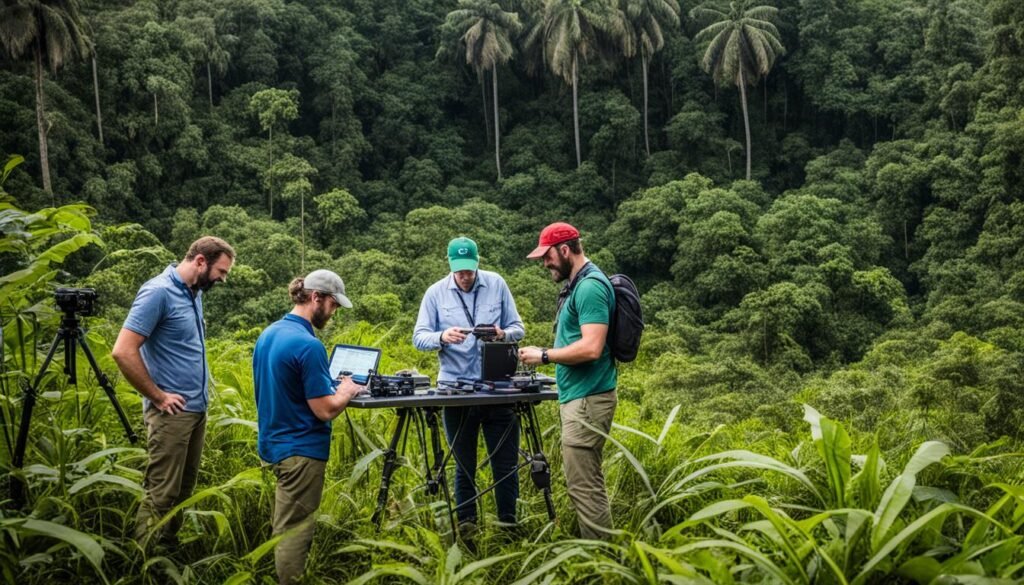
At the heart of WCS Gabon’s approach is wildlife monitoring. By closely tracking the populations and movements of key species, the organization can identify emerging threats and devise appropriate conservation solutions. This data-driven approach allows WCS Gabon to work closely with stakeholder collaborations, including government agencies, logging companies, and local communities, to implement effective management strategies.
Through a combination of scientific expertise, on-the-ground partnerships, and a deep understanding of Gabon’s unique forest ecosystems, WCS Gabon is leading the charge to protect this biodiversity hotspot for generations to come.
Scientific Research and Monitoring
At the forefront of Gabon’s conservation efforts, the Wildlife Conservation Society (WCS) Gabon team conducts rigorous scientific research and comprehensive monitoring programs. These initiatives play a pivotal role in guiding the management of Gabon’s tropical rainforests and developing effective strategies to protect the region’s remarkable biodiversity.
WCS Gabon employs advanced scientific methods to closely monitor the status of wildlife populations, such as estimating the numbers of elephants and gorillas. This invaluable data is then utilized to refine management practices and ensure that conservation interventions are having the desired impact on the ground. By continually tracking the effectiveness of their efforts, the organization can adaptively manage the forests, making informed decisions that maximize the positive outcomes for Gabon’s natural resources.
Alongside population assessments, WCS Gabon’s scientific research also delves into broader aspects of biodiversity, examining the complex interactions within Gabon’s tropical ecosystems. This comprehensive approach to monitoring and research provides a solid foundation for the development of conservation strategies that address the multifaceted challenges facing Gabon’s precious rainforests.
The insights gleaned from WCS Gabon’s scientific endeavors play a crucial role in guiding the sustainable management of Gabon’s forests, ensuring that the balance between economic development and environmental protection is maintained. By combining rigorous research with on-the-ground conservation efforts, WCS Gabon is making significant strides in preserving the ecological integrity of this global biodiversity hotspot.
Guided Forest Management Solutions
At the heart of WCS Gabon’s conservation approach lies a deep commitment to sustainable forestry and innovative forest management strategies. Drawing on extensive scientific research and close collaborations with local stakeholders, the organization develops tailored conservation-based solutions to address the unique challenges facing Gabon’s tropical rainforests.
By working closely with protected area managers and logging concession operators, WCS Gabon identifies key priorities for conservation and implements cutting-edge monitoring techniques to track the health and well-being of Gabon’s diverse wildlife. This collaborative approach ensures that stakeholder collaboration is at the forefront of the organization’s efforts to safeguard the country’s precious natural resources.
From developing innovative methods for monitoring large mammals to providing technical assistance to local communities in the management of national parks, WCS Gabon’s holistic approach to sustainable forestry is paving the way for a future where Gabon’s tropical rainforests thrive in harmony with the needs of its people and the global ecosystem.

Building National Capacity and Awareness
At WCS Gabon, we recognize the vital importance of capacity building, environmental education, and stakeholder engagement to drive sustainable forestry practices in the region. Our dedicated CEDAMM Training Center, located within the Lopé National Park, plays a pivotal role in this endeavor.
The CEDAMM Training Center offers professional training programs to conservation professionals and students from Central Africa. Through these programs, we aim to enhance their understanding of environmental stewardship and equip them with the necessary skills to effectively manage Gabon’s tropical rainforests. By investing in capacity building, we ensure that the local communities and government stakeholders have the knowledge and expertise to make informed decisions that prioritize both development and conservation.
Alongside our training initiatives, WCS Gabon actively collaborates with various educational institutions and organizations to raise awareness on the importance of environmental protection. Through outreach programs and awareness campaigns, we disseminate our expertise and promote sustainable forestry practices at a broader scale. By engaging with diverse stakeholders, we foster a shared responsibility for the preservation of Gabon’s invaluable rainforest ecosystems.
Our commitment to building national capacity and raising awareness is a crucial component of our holistic approach to tropical forestry management in Gabon. By empowering local communities, training conservation professionals, and collaborating with stakeholders, we are paving the way for a sustainable future that balances economic development and environmental protection.
Rain Forest Management (RFM) Company
Nestled in the heart of Gabon’s lush tropical rainforests, Rain Forest Management (RFM) has been a pioneering force in sustainable timber production since 1999. As a leading sawn timber company in the region, RFM owns and manages over 100,000 hectares of pristine forest, committed to responsible forestry practices that preserve the delicate balance of this remarkable ecosystem.
Sustainable Timber Operations
RFM’s approach to timber harvesting is guided by a deep understanding of the importance of environmental stewardship. The company’s sustainable timber operations ensure that the resources they extract are replenished, allowing the forest to thrive and maintain its ecological integrity. By adhering to Gabon’s stringent forestry laws and regulations, RFM demonstrates its unwavering commitment to the long-term preservation of this invaluable natural resource.
Forest Stewardship Council Certification
RFM’s dedication to responsible forestry practices is further solidified by its Forest Stewardship Council (FSC) certification. This prestigious accreditation recognizes the company’s adherence to the highest standards of environmental, social, and economic sustainability in its timber production operations. By earning this certification, RFM sets itself apart as a leader in the industry, championing the preservation of Gabon’s precious rainforests for generations to come.
Gabon: Tropical Forestry Management Libreville Gabon
Gabon’s tropical forestry sector plays a vital role in the country’s economy and environmental conservation efforts. The capital city of Libreville serves as a hub for Gabon forestry, timber production, and the processing of tropical hardwood species. Companies like RFM, which operate in Gabon’s northern provinces, contribute to the sustainable forest management of the country’s vast rainforest resources, ensuring a balance between economic development and ecological preservation.

Gabon is home to the second-largest tropical rainforest in the world, the Congo Basin, which plays a crucial role in regulating global climate and supporting diverse ecosystems. The country’s commitment to sustainable forestry practices has gained international recognition, with Gabon leading the way in developing innovative solutions to manage its timber production responsibly.
Libreville, the economic center of Gabon, is a hub for the timber industry, where tropical hardwood species are processed and exported to global markets. By partnering with companies that prioritize sustainable forest management, Gabon can continue to harness the economic benefits of its timber resources while preserving the biodiversity and ecological integrity of its rainforests.
RFM’s Product Range
As the leading sawn timber company in Gabon, RFM offers a diverse range of products crafted from the country’s tropical hardwood species. Their excavator mats, constructed with the durable Azobe wood, are designed to withstand the challenges of muddy landscapes and can support up to 50 tons of excavator weight. These mats provide a stable and reliable foundation for heavy machinery operations.
Excavator Mats
RFM’s excavator mats are a testament to the company’s commitment to delivering high-quality timber solutions. Azobe, a tropical hardwood species renowned for its exceptional strength and durability, serves as the foundation for these robust mats. Contractors and construction professionals rely on RFM’s excavator mats to ensure smooth and efficient operations, even in the most demanding environments.
Moulding Products
In addition to their excavator mats, RFM also produces a diverse range of wood moulding products. Utilizing species like Okan and Padouk, known for their natural resistance and vibrant characteristics, RFM’s moulding line caters to the needs of builders, interior designers, and homeowners alike. These moulding products offer a touch of tropical elegance to any project, adding visual interest and character to spaces.
Solid Doors
Expanding beyond their sawn timber offerings, RFM has invested in a solid wooden door production line, catering to the domestic market in Gabon. These affordable, beautiful, and reliable tropical hardwood doors, crafted from the company’s sustainably sourced timber, provide homeowners and businesses with a durable and aesthetically pleasing solution for their entryways and interior spaces.
Tropical Hardwood Species
Gabon’s tropical rainforests are a treasure trove of diverse hardwood species, highly prized in the global timber industry. Among the key species found in this Central African nation are Beli (also known as Awoura), Okan, Azobe, and Okoume. These tropical hardwood species exhibit a range of desirable characteristics, including remarkable durability, natural resistance, and captivating aesthetic appeal, making them suitable for a wide array of applications, from construction to furniture and interior decor.
The timber species native to Gabon’s lush forests are renowned for their exceptional wood characteristics. Beli, a highly valued tropical hardwood, is prized for its exceptional strength, resistance to decay, and distinctive reddish-brown hue. Okan, on the other hand, is known for its striking dark-colored grain and superior resistance to weathering, making it a popular choice for outdoor structures and marine applications.
Azobe, another prominent timber species from Gabon’s Central Africa region, is renowned for its exceptional durability and natural resistance to pests and rot, making it a preferred material for heavy-duty construction projects. Okoume, a versatile and lightweight tropical hardwood, is widely used in the manufacturing of plywood, furniture, and various woodworking applications due to its ease of workability and attractive appearance.

The diverse timber species found in Gabon’s lush tropical rainforests are a testament to the region’s remarkable biodiversity and the importance of sustainable forestry management practices. As the global demand for high-quality, eco-friendly wood products continues to grow, these exceptional tropical hardwood resources play a crucial role in supporting the region’s economic development while also promoting the conservation of its invaluable natural heritage.
The One Forest Summit 2023
In March 2023, the Gabonese government, in collaboration with the French government, hosted the One Forest Summit in Libreville. This significant event brought together heads of state, government officials, international organizations, the private sector, and civil society to address the common challenges faced by the African, Amazonian, and Asian tropical forest basins. The summit focused on advancing scientific cooperation, fostering sustainable value chains in the forestry sector, and unlocking innovative sources of financing, including market-based biodiversity protection solutions.
Objectives and Initiatives
The One Forest Summit aimed to promote international cooperation and sustainable development initiatives to conserve the world’s tropical forests. Participants at the summit explored ways to strengthen scientific research, enhance local communities’ involvement, and scale up financing for tropical forest conservation efforts.
Libreville Plan and Commitments
The “Libreville Plan” developed at the summit represents a roadmap for new commitments and initiatives to address the critical issues facing the world’s tropical forests. These include strengthening cross-border collaboration, implementing sustainable forestry practices, and investing in nature-based solutions to protect biodiversity and support local livelihoods.
Conclusion
Gabon’s tropical forestry sector plays a pivotal role in the country’s efforts to conserve its vast rainforest resources and protect its rich biodiversity. Through the collaborative efforts of the government, international organizations like WCS Gabon, and private companies such as RFM, a comprehensive approach to sustainable forestry management has been developed. This approach combines scientific research, innovative conservation solutions, capacity building, and stakeholder engagement to ensure the long-term preservation of Gabon’s invaluable tropical ecosystems.
As the world continues to grapple with the pressing challenges of climate change and biodiversity loss, Gabon’s model of tropical forestry management serves as a compelling example of how integrated, multi-stakeholder efforts can drive positive change and safeguard these critical natural resources. By prioritizing sustainable practices, promoting biodiversity conservation, and fostering a collaborative approach, Gabon’s forestry sector is setting a precedent for other nations to follow in the quest to protect the world’s irreplaceable tropical forests.
The successful implementation of Gabon’s tropical forestry management strategies underscores the importance of a holistic, multi-faceted approach to environmental conservation. By leveraging scientific research, developing innovative solutions, and building national capacity, Gabon has demonstrated the power of collective action in addressing complex environmental challenges. As the world looks to the future, Gabon’s example stands as a testament to the transformative potential of sustainable forestry management and the pivotal role it can play in safeguarding the world’s precious natural heritage.
Source Links
- Gabon’s Forest – https://gabon.wcs.org/en-us/Wild-Places/Gabons-Forests.aspx
- Padouk d’Afrique – http://www.rfmtimber.com/
- One Forest Summit – https://oneplanetsummit.fr/en/events-16/one-forest-summit-245