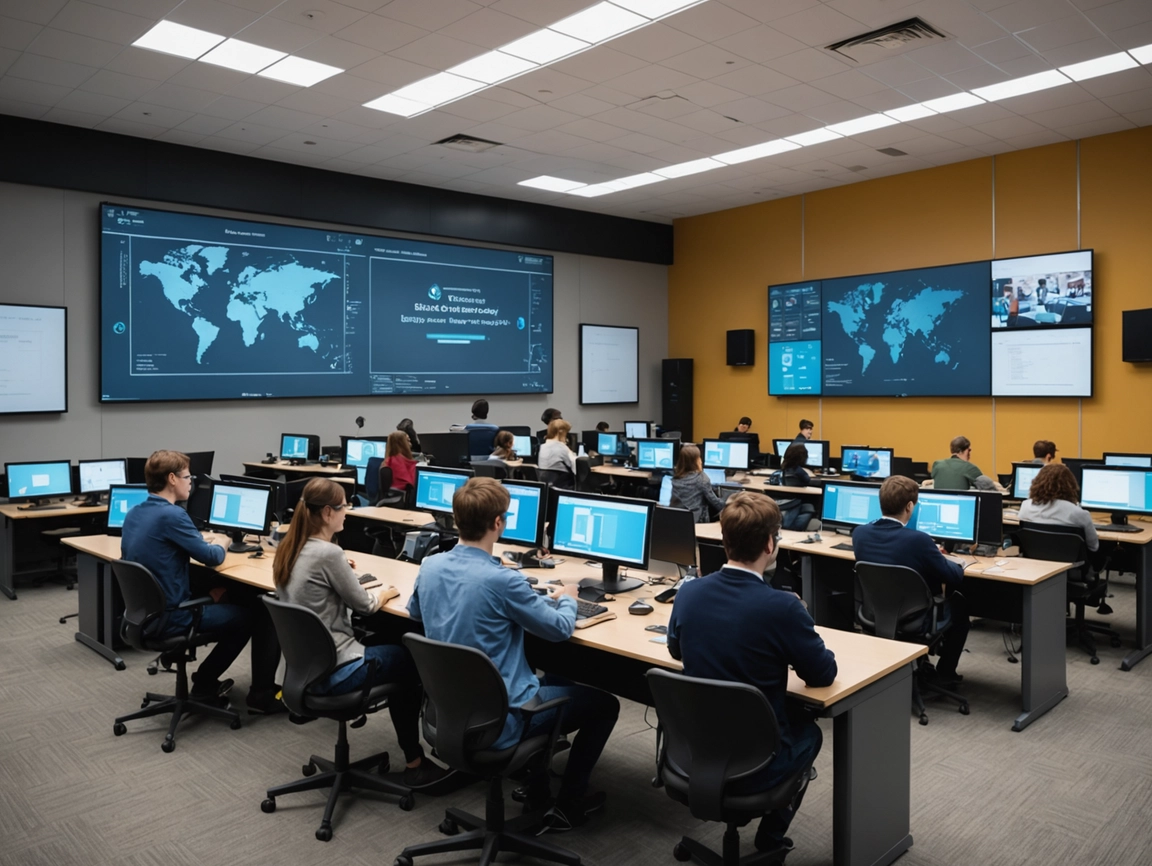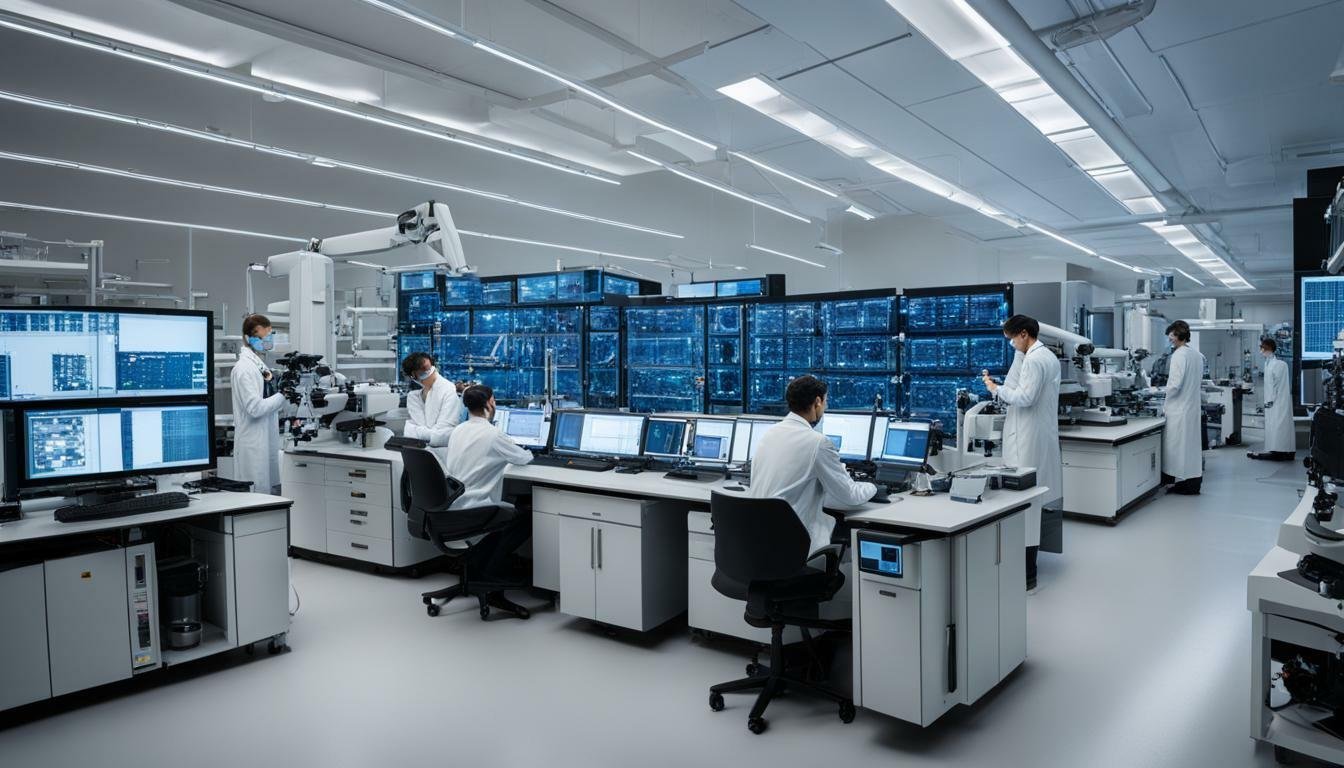
The United States is home to many major research facilities, from national laboratories to university research centers. These institutions house advanced equipment such as high-resolution imaging systems, supercomputers, and specialized labs that individual researchers could never afford on their own.
Modern research depends heavily on technology. Automation lets labs run experiments around the clock. Artificial intelligence and data analytics help scientists find patterns in large datasets. These tools have changed how research is done across fields, from medicine to materials science to climate studies.
Collaboration is another defining feature. Research centers bring together scientists from different disciplines to work on shared problems. A biologist, an engineer, and a data scientist might work side by side on the same project. This mixing of expertise often produces ideas that no single field would reach alone.
Funding for these facilities comes from a mix of federal agencies, private foundations, and industry partnerships. Grants are competitive, and researchers spend significant time writing proposals. The system rewards novel ideas, but it can also make long-term, high-risk research harder to sustain.
For students, these facilities offer a glimpse of where science is heading. Graduate programs often give students access to this equipment and to mentors working at the edge of their fields. If research appeals to you, look at programs with strong lab resources and active faculty projects. Related reading: STEM research grants for graduate students, the problem with outdated university education, and the online learning experience.