
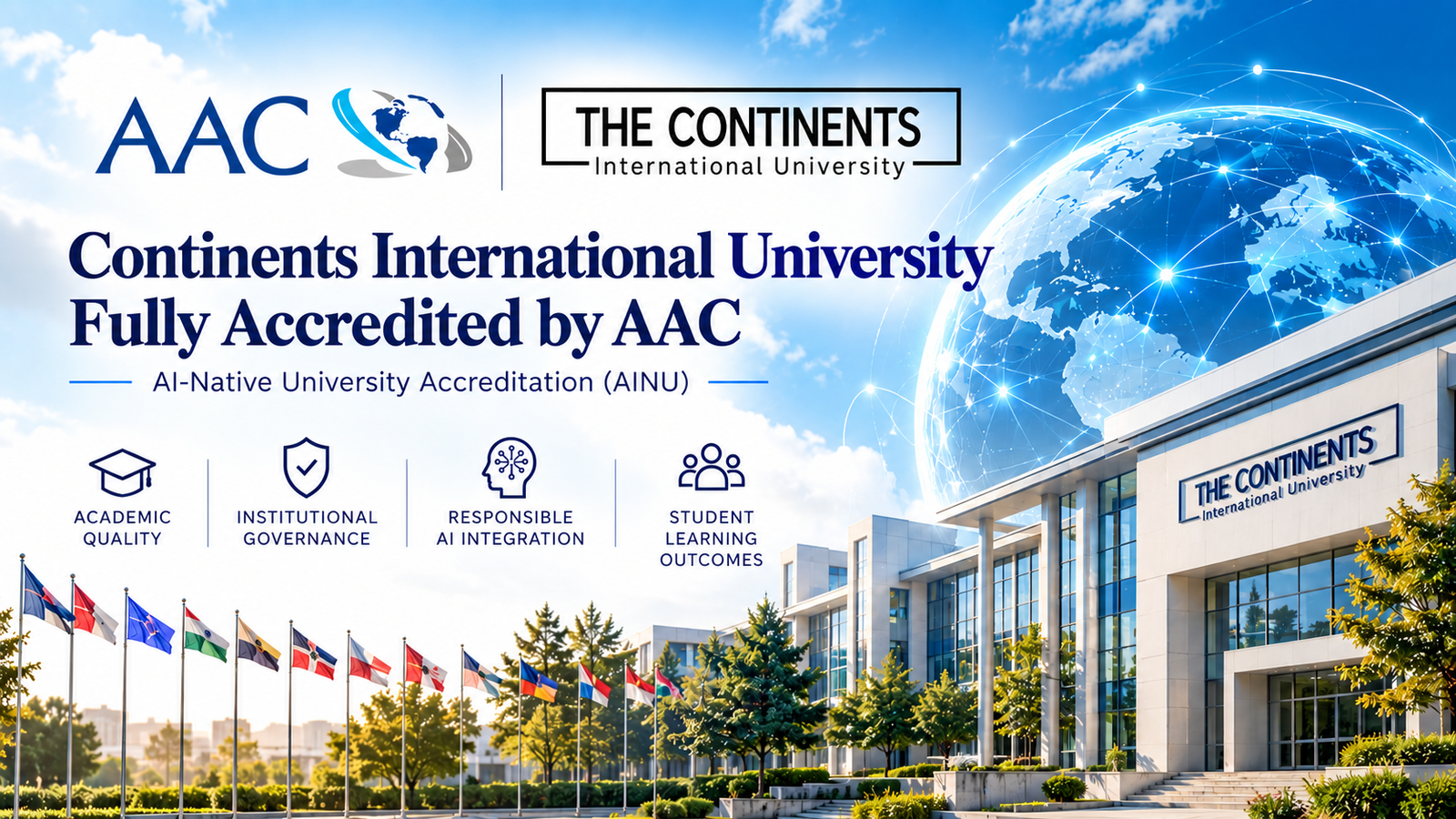
Continents States University Officially Becomes Continents International University Following AAC Accreditation

Facebook
Twitter
LinkedIn
Pinterest
Tumblr
Telegram
Higher education is changing quickly, and accreditation has to keep pace with it. Artificial intelligence is already reshaping teaching, assessment, academic integrity, governance, and student support.
[St. Louis, Missouri] – Continents States University is proud to announce a significant milestone in its institutional history.

[St. Louis, Missouri] – Continents States University is proud to announce a significant milestone in its institutional history. Effective immediately, the university will officially operate under the new name Continents International University (CIU) .

This historic name change comes on the heels of the university successfully earning accreditation from the AAC (Accrediting Agency Council) . This prestigious accreditation validates the institution’s commitment to academic excellence, rigorous standards, and student success.

The transition to Continents International University reflects the institution’s evolution from a regional university to a globally focused hub of learning. Earning AAC accreditation served as the catalyst for this rebrand, confirming that the university’s programs meet the highest quality standards. The new name better represents the university’s diverse student body and its mission to prepare students for a global economy.

While the name has changed, the university’s dedication to its students and alumni remains the same. All degrees conferred under the former name remain fully valid and are now backed by the strength of the AAC accreditation.

About Continents International University:
Continents International University (formerly Continents States University) is dedicated to providing high-quality education to a diverse community of learners. Now accredited by the AAC, CIU offers a wide range of undergraduate and graduate programs designed to foster innovation and global leadership.

The university website never change, and you can access it on https://www.continents.us/

Related Posts
AFP

How To Optimize Your LinkedIn Profile For AFP Networking Opportunities

AFP is the Association for Financial Professionals, the professional body for corporate treasury and finance staff. It sponsors two credentials: the Certified Treasury Professional (CTP) and the Certified Corporate FP&A Professional. If you work in treasury or financial planning, these letters carry weight, so put them in your LinkedIn headline where recruiters can see them. Write a headline that says what you do, not just your job title. Adding your specialty and credential tells a reader more than a title alone. Keep it short enough to read at a glance. In the summary section, describe your actual work. Name the systems you use, the size of the portfolios you manage, and the results you have produced. Recruiters search LinkedIn by keyword, so use the plain terms of the trade: treasury management, cash forecasting, risk assessment, financial planning. Connect with AFP members and people in treasury roles at companies you follow. Comment on their posts with something specific rather than generic praise. Join AFP-related LinkedIn groups and take part in the discussions. These habits are the same best practices for networking and building professional relationships that apply to any profession. Post occasionally about your own work. A short note on a project you finished or a change in your market is enough. Steady, real activity beats a polished but empty profile. Students can start earlier with these LinkedIn profile tips for students, and anyone can use LinkedIn to build connections and grow a professional network. Those considering graduate study can review online master’s degree options in finance.

Read More
University Enrollment

How To Choose The Right MiniMaster Course At Continents International University

Start with your goal. Write down the job you want after the program. Then read each MiniMaster track description on the university website and check which one teaches the skills that job needs. A vague interest in business is not enough. Be specific. Read the curriculum, not just the brochure. Look at the module list. Check how the work is assessed and how many hours each module takes each week. If the program page does not answer these questions, contact the university and ask. Be honest about your schedule. A short certificate still needs real hours every week. If you work full time, pick a pace you can keep for the whole program. Finishing matters more than finishing fast. Talk to people who finished the track you are considering. Alumni can tell you what the workload was really like and whether the certificate helped at work. The university may be able to connect you with past students. When you have a shortlist, read the enrollment guide for the MiniMaster program so you know the application steps. If you are weighing a MiniMaster against a full degree, see how students transition from a MiniMaster to full-time studies. New students can also review the resources available to MiniMaster students and tips for staying motivated during the program.

Read More