Can I work in the USA after studying?

Facebook
Twitter
LinkedIn
Pinterest
Tumblr
Telegram
Can I work in the USA after studying?
Explore your chances of working in the USA post-graduation. Get insights on visas, employment opportunities, and starting your dream career!

Yes, you can work in the USA after your studies, but you need the right authorization. Your student visa alone does not allow it.

The main route is Optional Practical Training (OPT). After you finish your program, OPT lets you work in your field of study for up to 12 months. If your degree is in a qualifying STEM field, you can apply for a 24-month extension.

Apply on time. You can file for OPT up to 90 days before your program ends, but no later than 60 days after it ends. USCIS must receive your work authorization application before your grace period runs out. Once approved, you receive an Employment Authorization Document before you can start work.

For longer-term work, you need an employer to sponsor you for an H-1B visa. These are issued through an annual selection process, and demand far exceeds supply. If selected, your employer files a petition, and approved workers can usually start on October 1.

Never work without authorization. Unauthorized work can end your visa status and hurt any future immigration plans. When in doubt, ask your school’s international student office before you accept a job.

Related reading: Can I get a green card after studying in the USA?, International Student Admission Requirements, and Affordable online master’s programs for international students.
Related Posts
Higher education is changing quickly, and accreditation has to keep pace with it. Artificial intelligence is already reshaping teaching, assessment, academic integrity, governance, and student support.
Awareness

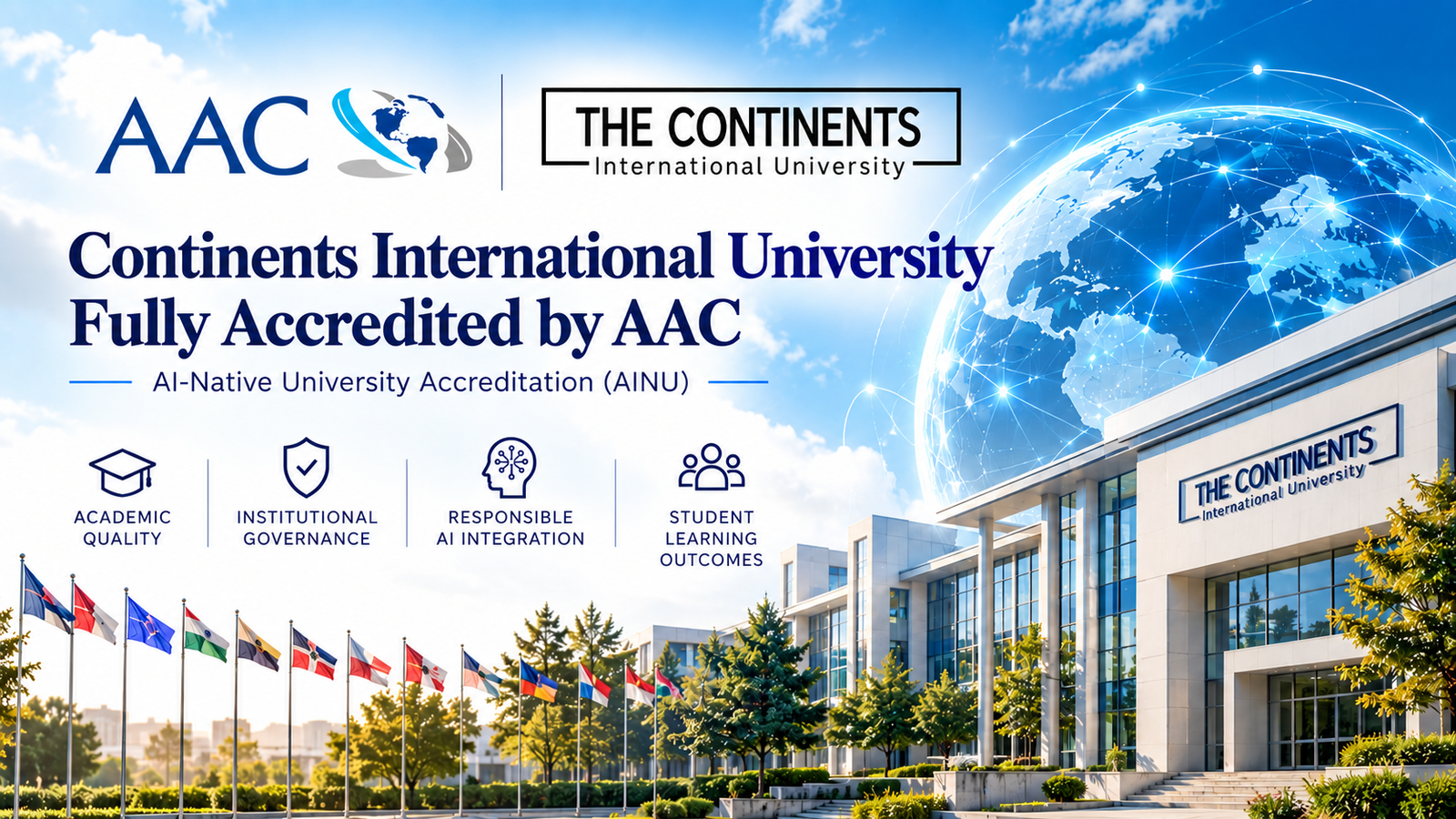
Continents International University Fully Accredited by AAC Through the AI-Native University Accreditation Framework

Continents International University is fully accredited by AAC through its AI-Native University Accreditation framework. The designation reflects an institutional review focused on academic quality, governance, student learning outcomes, integrity, and the responsible use of AI in higher education. For Continents International University, accreditation is part of a broader commitment to building a university model that responds to technological change without losing sight of academic standards. More information about the University’s status is available on its Licensing and Accreditation page. AAC is also developing its role around the future of quality assurance. As artificial intelligence becomes more integrated into universities, accreditation agencies will need to evaluate not only traditional academic standards, but also how institutions use AI responsibly, transparently, and effectively. That forward-looking approach may become increasingly important as higher education continues to change across borders, delivery models, and technologies. The University’s current accreditation record can be reviewed directly in the AAC Directory.

Read More
Awareness

Problem with Outdated University Education

University courses are only useful if they keep up with the field. Textbooks take years to write and publish. Curriculum review boards move slowly too. In fast-moving subjects like technology, health care, and public policy, a syllabus written five years ago can leave students studying ideas the industry has already moved past. This gap matters because employers hire people who can use current methods, not old ones. Students can graduate, start work, and find that their training does not match what the job requires. The cost falls on the graduate. Universities close this gap by reviewing course content often instead of waiting for a full curriculum overhaul. They check reading lists against recent research. They bring working professionals in to teach and advise. They ask graduates and employers what the program missed. Schools that do this through curriculum design that responds to feedback stay relevant longer. Students can protect themselves before enrolling. Ask when the course materials were last updated. Read the reading list and check the publication dates. Ask whether the program consults industry advisers, and what a competency-based curriculum looks like in practice. A school that cannot answer these questions is not paying attention to the problem. Before choosing any program, review how to judge whether a curriculum fits your goals. And consider delivery format as well: flexible online learning can make it easier to study while working, which matters most when the content is current.

Read More