
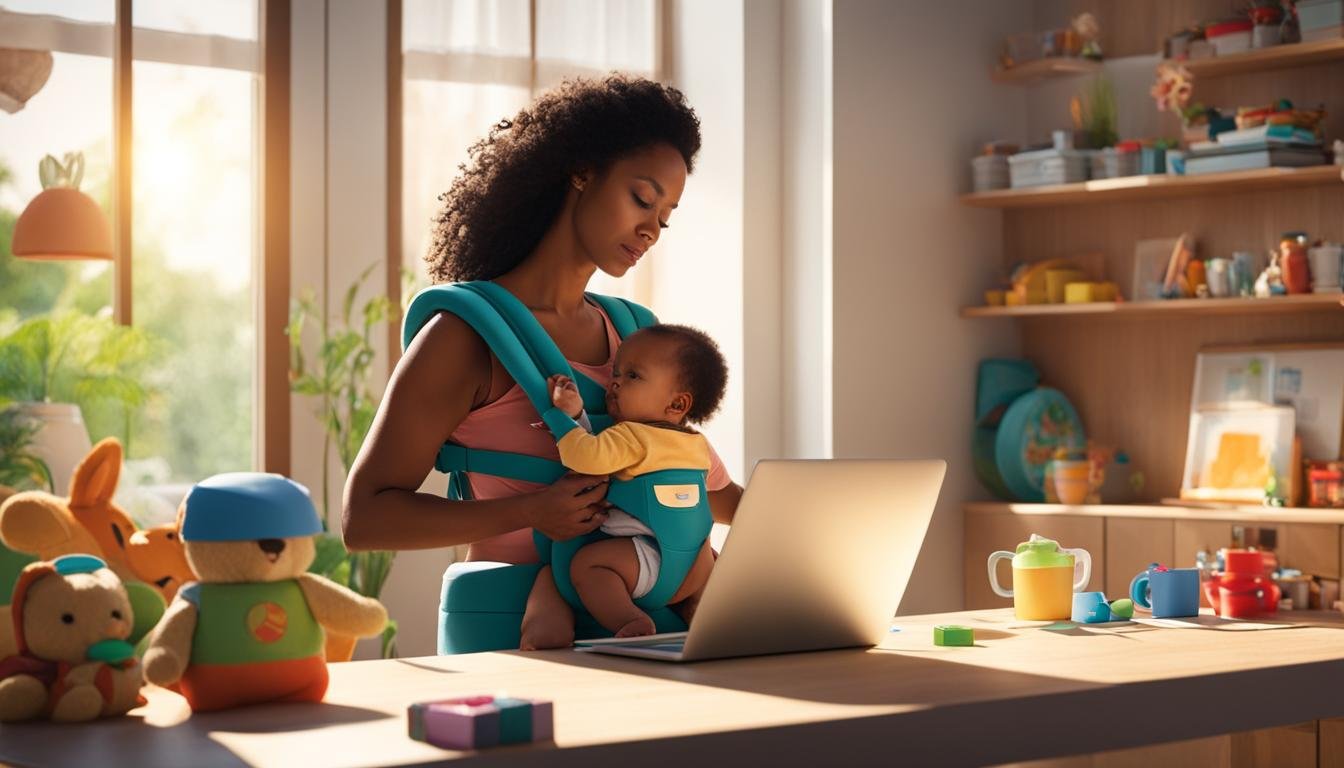
Balancing child care and self-employment or remote work can be a daunting task, especially in today’s fast-paced world. With the rise of flexible work options and the added responsibilities brought by the COVID-19 pandemic, managing child care while working remotely has become a major challenge for many parents.
According to a recent survey, 58% of Americans now have the ability to work from home at least once a week, making remote work the new norm. However, this new normal comes with its own unique set of challenges. Childcare costs have risen by 41%, and many parents are still hesitant to send their kids back to daycare due to health concerns.
In this article, we will explore 12 effective strategies to make working from home with kids easier and more manageable. From time management techniques to setting up a dedicated home office and prioritizing self-care, these strategies will help you achieve a better work-life balance while successfully managing child care responsibilities.
Stop Multitasking and Set Up a Home Office
When it comes to balancing child care and self-employment or remote work, one of the first strategies to consider is to stop multitasking and create a dedicated work environment. Multitasking may seem like a time-saving approach, but it can actually hinder your productivity and focus.
When you try to juggle multiple tasks while taking care of your children, it can quickly lead to overwhelm and a decrease in the quality of your work. Instead, it’s important to set up a home office space where you can focus solely on your work.
Having a dedicated work environment helps establish clear boundaries between your work and personal life, minimizing distractions and improving your ability to stay focused. By choosing a quiet corner in your house and investing in a comfortable chair and desk, you create a space that is conducive to productivity.
Consider using a monitor in your home office to clearly indicate when you’re in work mode. This visual cue can help train your mind to shift into a focused state whenever you sit down at your desk.
By creating a dedicated work environment, you not only optimize your productivity but also signal to your family and yourself that you are in work mode. This can help reduce interruptions and create a more professional atmosphere.
Remember, a well-designed home office is not just about aesthetics, but also about functionality. It’s essential to choose furniture and equipment that support your physical comfort and a healthy work environment.

Having a designated space for work allows you to separate your professional and personal life, making it easier to stay focused and be productive. So, dedicate a specific area in your home for your work. By doing so, you’ll be able to create a work environment that promotes efficiency and empowers you to achieve your goals.
Communicate with Key People at Work and Prioritize Self-Care
When it comes to balancing child care and self-employment or remote work, effective communication with your colleagues and superiors is crucial. By being open and honest about your challenges and limitations, you can build a supportive work environment. Most managers are understanding and willing to provide the necessary support, so don’t hesitate to let them know about sick children or times when you need to be offline. Clear communication helps avoid misunderstandings and manage expectations, ensuring a smoother work-life balance.
Prioritizing self-care is equally important to maintain your mental and physical well-being. Taking care of yourself allows you to perform at your best and be present for both your work and your children. Incorporating simple practices like staying hydrated, eating nourishing foods, and getting enough sleep can go a long way in preserving your overall health. Take regular breaks throughout the day to recharge and consider incorporating meditation or mindfulness exercises into your routine. Remember, asking for help when needed is a sign of strength and resilience, so don’t be afraid to reach out and delegate tasks when necessary.
To further enhance your understanding of the importance of communication at work and prioritizing self-care, consider the image below:

Pick Something to Let Go Of and Get Out of the House Sometimes
When it comes to balancing child care and self-employment or remote work, it’s important to recognize that you can’t do it all. Trying to juggle every task and responsibility can quickly lead to burnout and overwhelm. Instead, take a step back and identify what is truly important to you and your family. Prioritize those aspects of your life and be willing to let go of certain tasks or responsibilities that are not essential. Delegate tasks to others when possible and don’t be afraid to ask for help when needed. By letting go of non-essential tasks, you can create more space and time for the things that truly matter. This will help you achieve a better work-life balance and reduce stress levels.
Another important strategy for maintaining a healthy work-life balance is to get out of the house from time to time. Spending all of your time indoors, surrounded by work and child care responsibilities, can be mentally and physically draining. Taking breaks and engaging in outdoor activities can provide a much-needed downtime and boost your mental and emotional well-being. Consider going for a walk in nature, enjoying a picnic in a nearby park, or organizing playdates with other working parents. These activities will not only give you a break from work and child care but also help you recharge and refocus. Remember, taking time for yourself and engaging in outdoor activities is essential for your overall mental health.
Benefits of Outdoor Activities for Mental Health
- Boosts mood and reduces stress
- Increases creativity and problem-solving skills
- Improves focus and productivity
- Enhances overall well-being and quality of life
By picking something to let go of and getting out of the house sometimes, you can create a healthier work-life balance. Remember, it’s okay to prioritize your mental health and well-being. Don’t be afraid to make adjustments and find activities that bring you joy and relaxation. Your work and child care responsibilities will benefit from a refreshed and rejuvenated mindset. So, let go, get outdoors, and find that perfect balance between work, child care, and self-care.
Conclusion
Successfully balancing child care and self-employment or remote work requires a proactive approach and the implementation of intentional strategies. By incorporating the 12 strategies discussed in this article, such as stopping multitasking, setting up a home office, prioritizing self-care, and letting go of certain tasks, you can achieve a more harmonious work-life balance.
Remember, communication with your colleagues and seeking support when needed are crucial aspects of navigating this balance. By effectively communicating your challenges and limitations, you can manage expectations and avoid misunderstandings.
Additionally, prioritizing self-care and finding ways to get out of the house can significantly contribute to your productivity and overall well-being. Taking breaks, engaging in outdoor activities, and connecting with other working parents can provide the necessary downtime and rejuvenation you need.
While finding the right balance may require time and adjustments, with perseverance and the right strategies, managing both child care and self-employment or remote work is achievable. By taking care of yourself and creating a work environment that suits your needs, you can successfully navigate the demands of both personal and professional responsibilities.