

Refugee education programs are essential for providing quality education and support to displaced children around the world. These programs aim to empower refugee students, ensure access to education, and improve learning outcomes for those affected by conflict, displacement, and statelessness.
Key Takeaways:
- Schools for Refugees Around the World Programs play a crucial role in providing education to displaced children.
- Refugee schools offer a safe learning environment for those affected by war and displacement.
- Asylum programs support stateless individuals in accessing education and building a better future.
- Education for war victims is vital for their recovery and long-term well-being.
- Refugee education programs aim to empower students and create opportunities for successful integration.
Educate A Child (EAC)
Educate A Child (EAC) is a partnership between UNHCR and Educate A Child that has provided quality primary education to over 1.4 million refugee and internally displaced children worldwide since 2012. The program focuses on improving teaching and learning quality, ensuring safe learning environments, and strengthening partnerships with local education authorities.
One example of the impact of EAC is in Tapachula, Mexico, where the program has been vital for students at Antonio Damiano Cajas Elementary School. In this region, many unaccompanied children and adolescents face barriers to education. Through EAC, these students have been given the opportunity to receive a primary education, which serves as a foundation for their future.
The program not only focuses on providing access to education but also on enhancing the quality of education. By improving teaching methodologies and providing necessary resources, EAC aims to empower refugee and internally displaced children to overcome challenges and achieve their full potential.
Educate A Child’s efforts in providing primary education to refugee and internally displaced children contribute to a brighter and more inclusive future. By equipping young individuals with the necessary knowledge and skills, EAC ensures that they can have the opportunity to thrive and build a better life for themselves and their communities.
Instant Network Schools (INS) Program
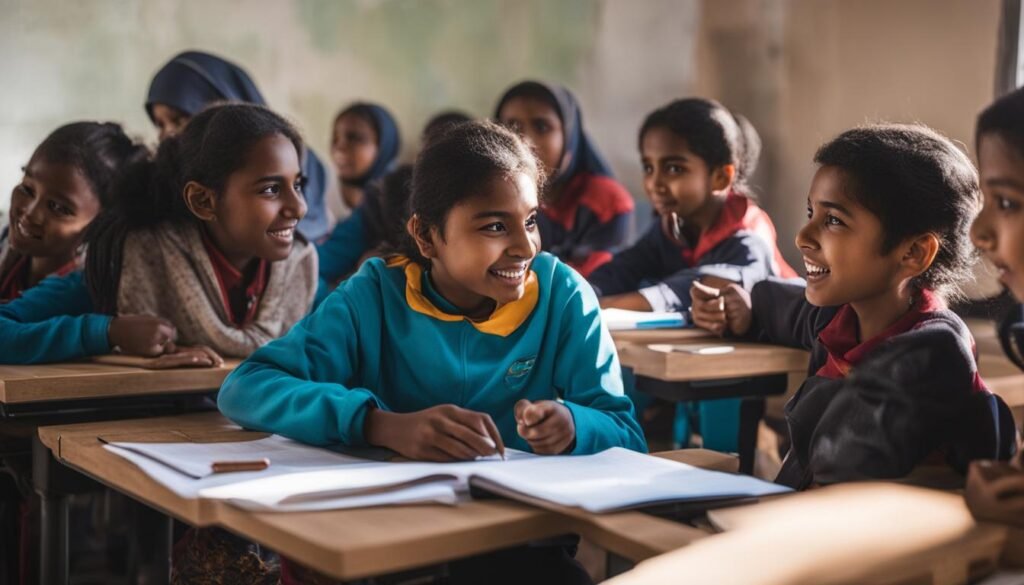
UNHCR and the Vodafone Foundation have partnered to create the Instant Network Schools (INS) program, which aims to provide refugee learners and host community children with access to digital tools, internet connectivity, and accredited learning opportunities. This innovative program has been implemented in multiple countries, including Egypt, Kenya, and Mozambique, reaching over 158,780 students and benefiting over 293,535 individuals.
INS goes beyond traditional education by leveraging digital technology to offer a wide range of learning resources. Through the program, refugee learners have the opportunity to access online courses, interactive learning tools, and educational content tailored to their needs. This not only enhances their academic skills but also prepares them for the digital world, equipping them with the necessary skills for future success.
Empowering Refugee Learners
The INS program recognizes the importance of providing quality education to empower refugee learners and foster their personal development. By offering accredited learning opportunities, INS ensures that refugee students receive a recognized education that opens doors to further academic pursuits and employment prospects. This helps break the cycle of displacement and offers a pathway to a brighter future.
“The INS program has transformed my life. It has given me access to educational resources and opportunities that I never thought were possible. I am now able to dream big and work towards achieving my goals,” says Ahmed, a refugee learner benefiting from the program.
Through INS, refugee learners are not only gaining knowledge and skills but are also building resilience and confidence. The program emphasizes the importance of connectivity not only to educational resources but also to a global community of learners, fostering a sense of belonging and providing a platform for peer-to-peer learning and collaboration.
The DAFI (Albert Einstein German Academic Refugee Initiative) scholarship program
The DAFI scholarship program has been a beacon of hope for over 21,500 refugee students worldwide, enabling them to pursue higher education and unlock brighter futures. Each year, the program receives a staggering number of applications, with over 8,300 refugee students from 53 different nationalities awarded scholarships in 2021 alone. This record-breaking achievement reflects the program’s commitment to providing access to higher education for displaced individuals.
The DAFI scholarship program aims to achieve gender parity, with female students making up an impressive 41 percent of recipients. Through these scholarships, refugee women are empowered to break barriers and achieve their educational goals, paving the way for greater gender equality and women’s empowerment within refugee communities.
The impact of the DAFI scholarship program goes beyond individual success stories. It plays a vital role in building the capacity and resilience of refugee communities by equipping them with the knowledge and skills needed for positive change. By investing in higher education scholarships, the program strengthens the potential of refugee students to contribute meaningfully to their societies, both during and after their studies.
Accelerated Education (AE) Program

UNHCR’s Accelerated Education (AE) programs are designed to provide access to education for disadvantaged and out-of-school youth, helping them complete a certified level of education in a shorter period of time. These programs target vulnerable populations, including refugee children, who have limited or interrupted access to formal schooling. By offering accelerated learning opportunities, AE programs aim to bridge educational gaps and ensure that these youth can catch up on missed education and acquire essential knowledge and skills.
One key aspect of the AE program is its focus on socio-emotional learning (SEL). Recognizing the unique challenges and trauma that refugee and disadvantaged youth often face, AE programs prioritize the development of social and emotional skills alongside academic knowledge. By incorporating SEL into the curriculum, students not only gain academic proficiency but also improve their emotional well-being, self-awareness, and interpersonal skills. This holistic approach to education equips them with the tools needed to navigate challenges, build resilience, and succeed in their personal and academic lives.
Benefits of the AE Program:
- Provides access to education for disadvantaged and out-of-school youth
- Enables students to complete a certified level of education in a shorter period of time
- Prioritizes socio-emotional learning to support students’ emotional well-being
- Equips students with essential academic knowledge and interpersonal skills
- Addresses educational gaps and helps students catch up on missed schooling
The successful integration of refugee youth and their families is another important outcome of the AE program. By offering accelerated learning opportunities, these programs empower refugee students to acquire the necessary skills and knowledge to thrive in their new communities. Education plays a significant role in fostering social cohesion and creating a sense of belonging for refugee children. The AE program not only serves as a stepping stone towards a brighter future for these youth but also contributes to the overall community integration and inclusion.
Example Quote from a Beneficiary:
“The AE program not only helped me catch up on my education but also provided me with a supportive environment to heal and grow. I learned not only academic subjects but also important life skills like resilience, empathy, and self-confidence. It gave me hope and opened doors for a better future. I am grateful for the opportunities the AE program provided me.” – Sara, a former AE program participant.
Conclusion
Refugee education programs are instrumental in providing crucial support and quality education to displaced children worldwide. Through UNHCR’s programs like Educate A Child, Instant Network Schools, DAFI Scholarships, and Accelerated Education, refugee students are empowered to overcome obstacles and strive for a brighter future.
These programs have given young refugees like Emma, Noëlla, and Roza the tools and resources they need to learn, grow, and achieve their dreams. By supporting these initiatives, individuals can make a significant impact on the lives of displaced children and contribute to a more inclusive and empowered future.
By focusing on education, these programs address the urgent need to provide access to learning for refugee children who have been forced to leave their homes due to conflict, persecution, or other challenges. Education not only equips these children with knowledge and skills but also fosters their social and emotional development, enabling successful integration into their new communities.
In supporting refugee education programs, we can collectively work towards a society that values and invests in the potential of every child, regardless of their background or circumstances. Together, we can provide the support and opportunities necessary for displaced children to thrive, ensuring a more empowered and promising future for all.
FAQ
What are some of UNHCR’s refugee education programs?
UNHCR offers several programs, including Educate A Child, Instant Network Schools (INS), DAFI Scholarships, and Accelerated Education (AE).
How many refugee children are not in school?
According to UNHCR’s 2022 education report, nearly half of all school-aged refugee children are not in school.
What is the Educate A Child (EAC) program?
The Educate A Child program is a partnership between UNHCR and Educate A Child that provides quality primary education to refugee and internally displaced children worldwide. It focuses on improving teaching and learning quality, ensuring safe learning environments, and strengthening partnerships with local education authorities.
What is the Instant Network Schools (INS) program?
The Instant Network Schools program, established by the Vodafone Foundation and UNHCR, provides young refugees and host community children with access to digital tools, resources, internet connectivity, and teacher training. It offers accredited, quality, and relevant learning opportunities.
What is the DAFI scholarship program?
The DAFI scholarship program has provided scholarships to over 21,500 refugee students worldwide. It aims for gender parity and enables refugee students to pursue higher education.
What is the Accelerated Education (AE) program?
The Accelerated Education program provides access to education for disadvantaged and out-of-school youth. It helps them complete a certified level of education in a shorter period of time, with a focus on increased and more effective learning.
How do these programs empower refugee students?
These programs provide quality education, improve access to schools, technology, and learning tools, and empower refugee students to achieve their dreams.
How can individuals support these programs?
By supporting these programs, individuals can make a significant impact on the lives of displaced children and contribute to a more inclusive and empowered future.