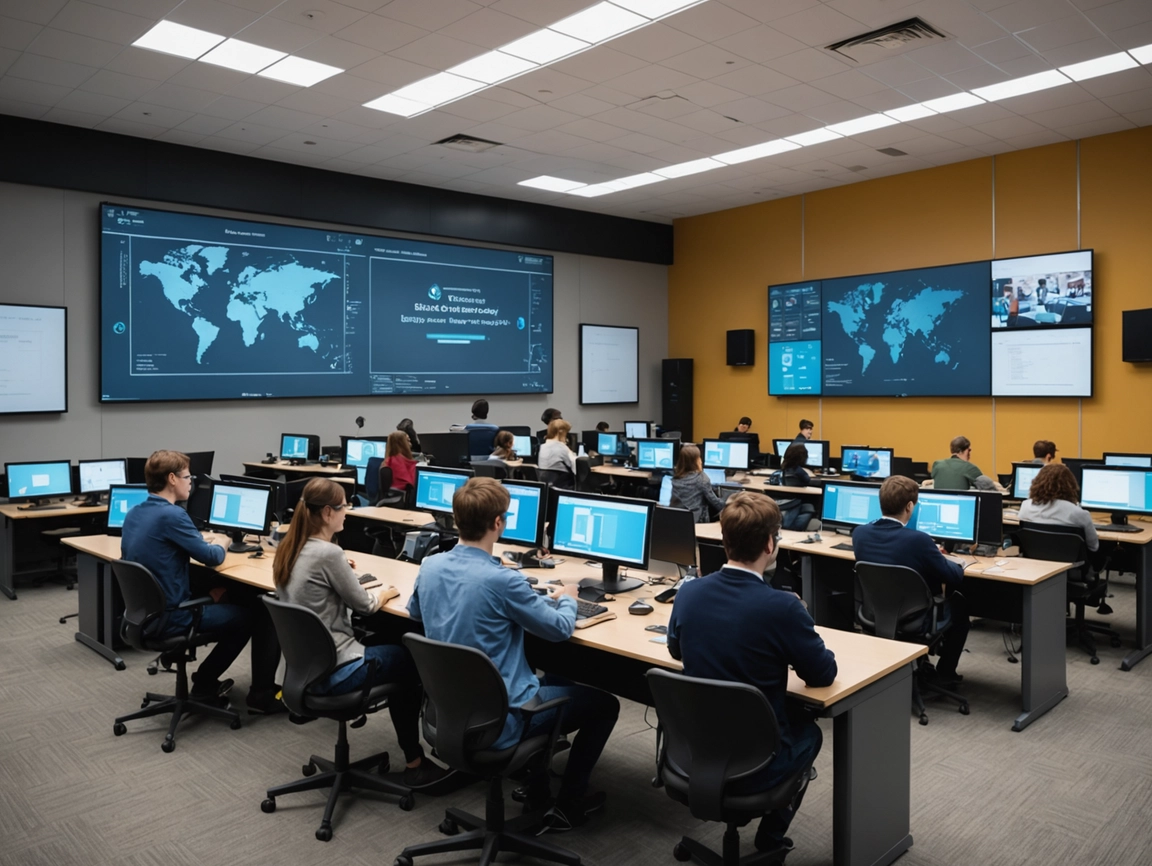

Did you know that you can pursue a master’s degree without any work experience? That’s right! The Continents States University, located in Missouri, United States, offers a range of master’s degree programs that don’t require any prior work experience.
Unlike traditional educational institutions, The Continents States University believes in providing equal opportunities to all individuals, regardless of their work background. Whether you’re a recent graduate or seeking to enhance your skills, pursuing a master’s degree without work experience can open doors to new career prospects and personal growth.
Key Takeaways:
- You can pursue a master’s degree without any work experience at The Continents States University.
- The university offers a variety of master’s degree programs that don’t require prior work experience.
- Choosing a master’s degree program without work experience can provide new career opportunities and personal development.
Business Schools’ Requirements for Work Experience in Master’s Programs
When considering pursuing a master’s degree in business, one of the key questions that often arises is whether work experience is a requirement for admission. While some programs do value work experience, many business schools do not explicitly require it.
For example, Hanken Business School and Luiss Business School are two prestigious institutions that encourage bachelor’s graduates to apply to their master’s programs without any work experience requirement. Instead, they prioritize a candidate’s previous academic record as the most important factor for admission, recognizing the potential of fresh graduates to contribute unique perspectives and ideas to the classroom.
It is worth noting that while work experience can be beneficial in applying to business master’s programs, it is not a prerequisite for most programs. Generalist programs usually focus on developing foundational business knowledge and skills, making them accessible to individuals without prior work experience in the field. These programs offer a valuable opportunity for recent graduates to gain specialized knowledge and enhance their career prospects.
However, it is essential to keep in mind that specialized master’s programs may have specific work experience requirements. For instance, the London Business School’s Master in Finance program requires applicants to have relevant financial experience to ensure that students can fully engage with the advanced curriculum and contribute to class discussions.
Why Choose a Master’s Program Without Work Experience Requirement?
Opting for a master’s program without a work experience requirement can offer several advantages. Firstly, it allows individuals to expedite their education and enter the job market sooner. By pursuing a master’s degree immediately after completing their undergraduate studies, they can build on their academic foundation and acquire advanced knowledge and skills sooner.
Additionally, these programs provide an opportunity for young professionals to gain a competitive edge in their chosen field. Without the need for work experience, individuals can focus on leveraging their academic achievements, extracurricular activities, and internship experiences to demonstrate their potential and commitment to their future careers.
Ultimately, whether to pursue a business master’s program without work experience is a personal decision that depends on one’s specific goals and circumstances. It is essential to thoroughly research and assess the admission requirements and program offerings of different schools to find the best fit for your academic and professional aspirations.

Starting a Career in Business Analytics Without Work Experience
Business analytics is a rapidly expanding field that offers numerous opportunities for professionals like you. Whether you have prior work experience or not, there are pathways available to kickstart your career in this dynamic industry.
One way to enter the business analytics field is by starting in an entry-level business or technical role and gradually building your skills through certifications or degrees. Another path is pursuing a specialized degree, such as a Master of Science in Business Analytics (MSBA).
MSBA programs are designed to accommodate both individuals with work experience and those without. These programs cover a wide range of topics, including statistics, programming languages, data mining, and machine learning. Moreover, they also incorporate essential business fundamentals.
Networking with professionals in the field and gaining relevant experience through internships or projects can greatly enhance your chances of securing a business analytics position. The demand for MSBA graduates is on the rise, with global employers actively seeking candidates with strong analytics skills and knowledge.
If you are considering pursuing a career in business analytics, Wake Forest University offers a full-time MSBA program that provides experiential learning opportunities to build real-world experience before graduation. This program can equip you with the necessary knowledge and skills to thrive in the business analytics field, even without prior work experience.