
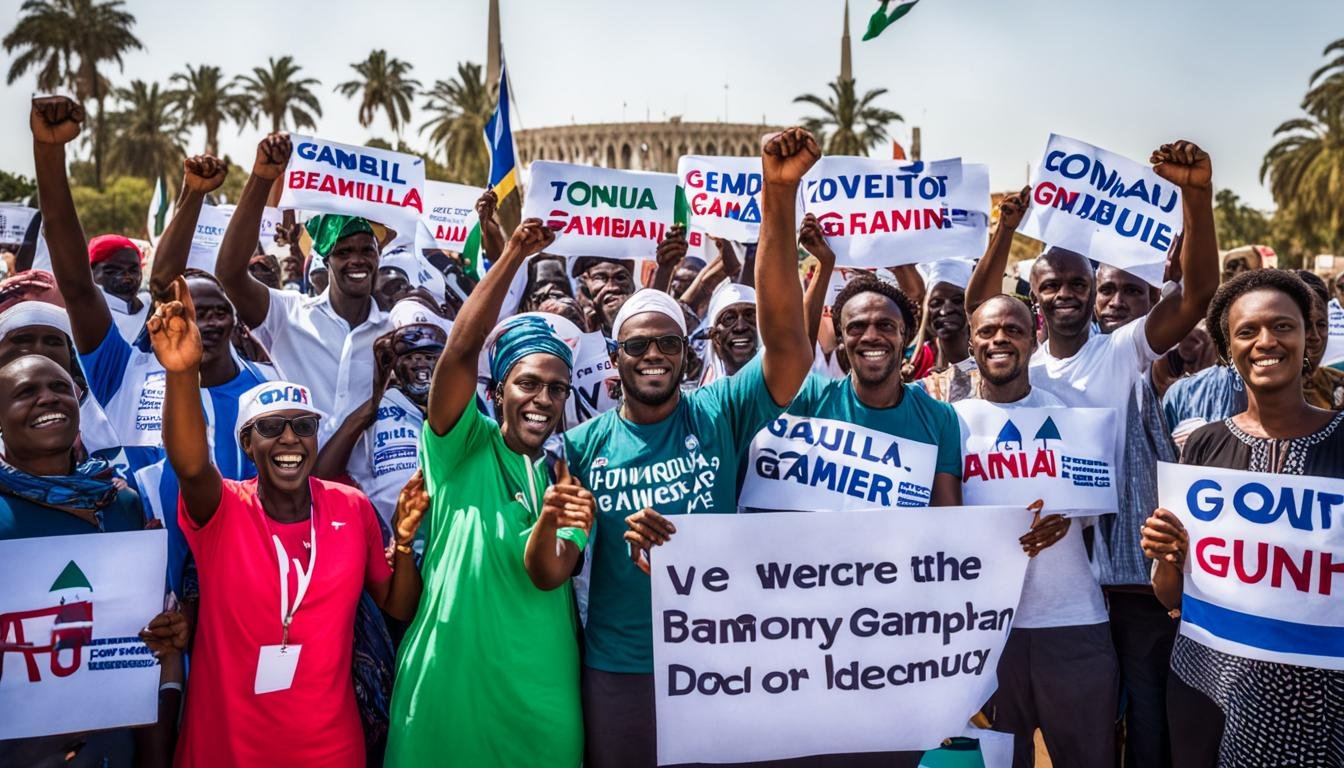
The Gambia, a small West African nation, has become a focal point for democracy studies in the region. With a population of just over 2.4 million, this country has managed to captivate the attention of scholars and policymakers alike, as it navigates the complex landscape of democratic governance. The African Centre for Democracy and Human Rights Studies (ACDHRS), headquartered in Banjul, the capital city, has played a pivotal role in shaping the discourse around democratic practices and human rights in The Gambia.
Key Takeaways
- The Gambia, a small West African nation, has become a focus for democracy studies in the region.
- The African Centre for Democracy and Human Rights Studies (ACDHRS) in Banjul plays a key role in promoting democratic governance and human rights.
- The Gambia’s political landscape has undergone significant changes, with the peaceful transition of power from former President Yahya Jammeh to President Adama Barrow in 2017.
- The Gambia’s democratic institutions and civil society organizations continue to face challenges, but also present opportunities for further democratic consolidation.
- International engagement and regional cooperation are critical factors in the country’s democratic development.
Introduction to the African Centre for Democracy and Human Rights Studies
The African Centre for Democracy and Human Rights Studies (ACDHRS) is a regional non-governmental organization established in Banjul, The Gambia, in June 1989. Its primary mission is to promote the observance of human and peoples’ rights, as well as democratic principles, throughout the African continent.
Background and Mission
The ACDHRS was founded with the goal of cooperating with other African and international institutions to advocate for human rights and democratic governance across Africa. The Centre has been granted diplomatic immunities and privileges by the Government of The Gambia and holds Observer Status with the African Commission on Human and Peoples’ Rights.
Governance and Structure
The ACDHRS is governed by an independent Council of experts in the field of human rights. The Council includes ex-officio members such as the Attorney-General of The Gambia and the Chair of the African Commission on Human and Peoples’ Rights, as well as representatives from the African Bar Association and other non-governmental organizations. The Centre is staffed by women and men with expertise from various subregions of Africa.
Since its inception, the ACDHRS has received material and financial support from various national, international, and governmental sources. The Centre operates eight inter-related human rights programs, including research, documentation, training, and networking initiatives aimed at strengthening democracy and human rights in Africa.
History of Democracy in The Gambia
The Gambia, a small West African nation, has a rich and complex history when it comes to democracy. The country gained independence from the United Kingdom in 1965, marking the beginning of its journey towards self-governance and democratic rule. Since then, the Gambia has navigated through both democratic and authoritarian periods, reflecting the challenges many developing nations face in consolidating their democratic institutions.
A notable period in the Gambia’s political history was the 22-year rule of President Yahya Jammeh, who seized power in a military coup in 1994. During Jammeh’s presidency, the country experienced a concerning backsliding of democratic norms and practices, with allegations of human rights abuses and a crackdown on political dissent. However, the peaceful transfer of power to President Adama Barrow in 2017, following Jammeh’s refusal to accept the election results, has renewed hopes for the Gambia’s democratic consolidation.
The Gambian political system is based on a presidential system, with the President serving as both the head of state and head of government. The legislative branch is a unicameral National Assembly, while the judicial branch is independent and includes both common law and Islamic law (Sharia) courts. This unique blend of governance structures reflects the country’s diverse cultural and religious heritage, which has shaped the evolution of its democratic institutions over time.

As the Gambia continues to navigate its democratic journey, the role of civil society organizations, international engagement, and regional cooperation will be crucial in addressing the challenges and opportunities that lie ahead. The country’s commitment to democratic principles and the peaceful transfer of power in 2017 have demonstrated its resilience, offering a glimmer of hope for the future of democracy in the region.
The Gambian Political System
The Gambian political system is a fascinating blend of democratic structures and traditional governance. At the heart of this system lies the executive branch, led by the President who serves as both the head of state and head of government. The President is elected through a direct popular vote and can serve a maximum of two five-year terms, ensuring a balance of power and regular transitions of leadership.
Executive Branch
The executive branch of the Gambian government is responsible for the day-to-day administration and implementation of policies. The President, as the head of the executive branch, holds significant power and appoints the cabinet ministers, high-ranking officials, and the Supreme Court justices. This structure provides the President with a strong role in shaping the nation’s governance.
Legislative Branch
The legislative branch in Gambia is a unicameral National Assembly, where members are elected through a combination of first-past-the-post and proportional representation systems. This unique approach ensures that diverse voices are heard in the law-making process, reflecting the country’s commitment to inclusive governance. The National Assembly plays a crucial role in checks and balances, providing oversight and scrutiny of the executive branch’s actions.
The Gambian political system, with its separation of powers and system of checks and balances, aims to promote democratic principles and prevent the abuse of power. This intricate balance between the executive, legislative, and judicial branches is a testament to Gambia’s ongoing efforts to strengthen its democratic institutions and ensure good governance for its people.
Key Issues in Gambian Democracy
The Gambia, a West African nation, has faced significant challenges in its democratic development. Under the previous Jammeh regime, the country witnessed widespread human rights abuses, including arbitrary detentions, torture, and extrajudicial killings. The judicial system was also perceived as lacking independence and impartiality.
Human Rights
Since the transition to the Barrow administration in 2017, there have been efforts to address these human rights concerns and strengthen democratic institutions. However, challenges remain in fully protecting the fundamental rights of Gambian citizens. The government has taken steps to investigate past abuses and promote accountability, but more work is needed to ensure the long-term protection of human rights in the country.
Elections and Political Freedoms
The conduct of elections in The Gambia has also been a source of controversy, with allegations of voter intimidation, ballot tampering, and other irregularities during past elections. The 2016 presidential election, which resulted in Jammeh’s defeat and Barrow’s victory, was seen as a significant democratic milestone, but the long-term consolidation of democratic norms and practices remains an ongoing challenge. Ensuring the integrity of the electoral process and safeguarding political freedoms are crucial for the Gambia’s democratic development.

Role of Civil Society Organizations
Gambian civil society organizations (CSOs) have played a pivotal role in promoting democracy and human rights in the country. The African Centre for Democracy and Human Rights Studies (ACDHRS), based in Banjul, is a prominent regional non-governmental organization (NGO) that has worked to increase awareness of international human rights procedures, conduct research on human rights issues, and support the capacity-building of other African human rights NGOs.
Other Gambian CSOs, such as the Gambia Press Union and the Gambia Bar Association, have also been active in advocating for press freedom, judicial independence, and the rule of law. During the Jammeh regime, many of these CSOs faced repression and restrictions, but since the democratic transition, there has been a renewed focus on strengthening civil society’s role in the country’s democratic development.

These Gambian civil society organizations have been instrumental in holding the government accountable, promoting transparency, and amplifying the voices of marginalized communities. Their work has been crucial in shaping the country’s democratic trajectory and ensuring that human rights are protected and upheld.
International Engagement and Regional Cooperation
The Gambia has actively engaged with various international and regional bodies to promote democracy and human rights within its borders. As a member of the African Union (AU) and the Economic Community of West African States (ECOWAS), the country has leveraged these platforms to address critical issues and work towards strengthening democratic institutions.
Through its participation in the Universal Periodic Review (UPR) process of the United Nations Human Rights Council, The Gambia has welcomed recommendations to improve its human rights record. Additionally, the country has ratified several international human rights treaties, including the International Covenant on Civil and Political Rights and the African Charter on Human and Peoples’ Rights, demonstrating its commitment to upholding global standards.
These international and regional engagements have played a vital role in shaping The Gambia’s democratic trajectory and holding its government accountable to human rights standards. The Gambia’s active participation in these forums has fostered greater cooperation and collective action towards advancing democracy and protecting human rights in the region.
Challenges and Opportunities for Democratic Consolidation
Gambia’s journey towards democratic consolidation faces both challenges and opportunities. The country has made significant strides since its transition to democracy in 2017, but the long-term sustainability of these reforms remains uncertain. One of the key challenges is the legacy of authoritarian rule, which has left a lasting impact on the country’s institutions and governance structures.
Weak institutional capacity and socioeconomic disparities also pose obstacles to democratic consolidation. Addressing human rights abuses, strengthening the rule of law, and improving government transparency and accountability are crucial steps in this process. Additionally, the needs of marginalized communities must be addressed to ensure inclusive development and social cohesion.
Despite these challenges, Gambia has opportunities to build on its democratic progress. Leveraging international and regional partnerships, fostering a vibrant civil society, and implementing institutional reforms to improve governance and service delivery can all contribute to the successful consolidation of democracy. The successful consolidation of democracy in Gambia will require a sustained commitment to democratic principles and inclusive development.
Conclusion
The Gambia’s journey towards democratic consolidation has been a complex and, at times, challenging process. The country has experienced both periods of democratic progress and authoritarian backsliding, with the peaceful transfer of power in 2017 representing a significant milestone in its democratic development. However, the long-term sustainability of democracy in The Gambia will require addressing persistent challenges, such as human rights abuses, weak institutions, and socioeconomic inequalities.
By leveraging international and regional partnerships, fostering a vibrant civil society, and implementing institutional reforms, The Gambia has the opportunity to build on its democratic achievements and cement its status as a model of democratic governance in West Africa. The continued commitment of the Gambian government, civil society, and the international community will be crucial in shaping the country’s democratic future.
As The Gambia moves forward, it must remain vigilant in its efforts to uphold democratic principles, protect human rights, and ensure the equitable distribution of resources and opportunities. With a renewed focus on inclusive governance, transparent institutions, and civic engagement, the country can solidify its position as a beacon of democracy in the region and inspire others to follow in its footsteps.
Source Links
- Introducing the African Centre for Democracy and Human Rights Studies (ACDHRS) – http://hrlibrary.umn.edu/africa/ACOHRS.htm
- Book Launch: Exploring Minority Discontent in Nigeria – https://www.acdhrs.org/
- The Gambia’s Political Transition to Democracy: Is Abortion Reform Possible? – https://www.ncbi.nlm.nih.gov/pmc/articles/PMC6927371/