
Did you know that over 6 million students are currently enrolled in online degree programs in the United States? With the rising costs of higher education, financial aid has become increasingly essential for online learners seeking to make their academic dreams a reality.
Whether you study online degree programs or on a traditional campus, financial aid can help you pay for college. Online learners are eligible for the same financial aid options as their on-campus counterparts, including federal financial aid. Accredited colleges and universities offer various types of financial aid for online students, ranging from loans to scholarships to grants. A good starting point is checking your eligibility for the Free Application for Federal Student Aid (FAFSA).
This article will walk you through all the financial aid options for online college students and the application process for securing funds to make your online education costs more manageable.
Key Takeaways
- Online students have access to the same financial aid options as traditional students, including federal aid.
- Scholarships, grants, and work-study programs can help offset the costs of online education.
- Completing the FAFSA is a crucial first step in securing financial assistance for your online degree.
- Exploring employer tuition assistance and managing student loan borrowing can further maximize your financial aid.
- Work closely with your online college’s financial aid office to ensure you’re taking advantage of all available funding opportunities.
Understanding Financial Aid Options for Online Students
Many students use multiple sources to fund their online degrees. Each type of financial aid can have varying requirements and limitations. The most popular financial aid options for online students include scholarships, loans, grants, and work-study programs.
Types of Financial Aid for Online College
Private donors, organizations, state governments, and colleges provide scholarship aid. Your grades, career interests, or financial need can all qualify you for a scholarship. You can also narrow your pool of competitors by looking for scholarships specifically for online students studying your major. When applying for scholarships, you’ll usually need to provide an essay writing sample, college transcripts, and information about your expected family contribution.
Scholarships for Online Learners
Loans are borrowed money the federal government or private lenders provide to students. You’ll want to look specifically at the varying loan terms and interest rates when choosing. Based on the FAFSA form, you can apply for subsidized loans, unsubsidized loans, Direct PLUS loans, or direct consolidation loans. Undergraduates in financial need can apply for subsidized loans, which do not accrue interest while they attend college. Unsubsidized loans, for students not necessarily in financial need, collect interest while in college.
Federal and Private Student Loans
The federal and state governments, as well as colleges and nonprofits, offer grants. Unlike loans, grants do not need repayment. For instance, Pell Grants provide low-income students with funding for college that doesn’t need to be repaid unless they leave college early. Federal work-study programs allow online students to get paid to work part-time on campus or off campus, often engaging in community service.

Financial aid for online degrees: Eligibility and Application Process
The financial aid process does not differ between online and traditional students. As an online learner, you can qualify for the same type of funding, such as grants and loans, as long as you complete the FAFSA application and the school is accredited. The federal government sets basic eligibility requirements for financial aid, and your eligibility often hinges on your financial need or what you and your family can contribute to your education. To qualify, you must also hold U.S. citizenship and pursue an accredited degree or certificate program.
Checking Your Eligibility for Financial Aid
The federal government sets basic eligibility requirements for financial aid. As an online student, you can qualify for all the loans, scholarships, and grants that are also available to traditional students. Your eligibility for aid often depends on your financial need or what you and your family can contribute to your education. To qualify, you must also hold U.S. citizenship and pursue an accredited degree or certificate program.
Completing the Free Application for Federal Student Aid (FAFSA)
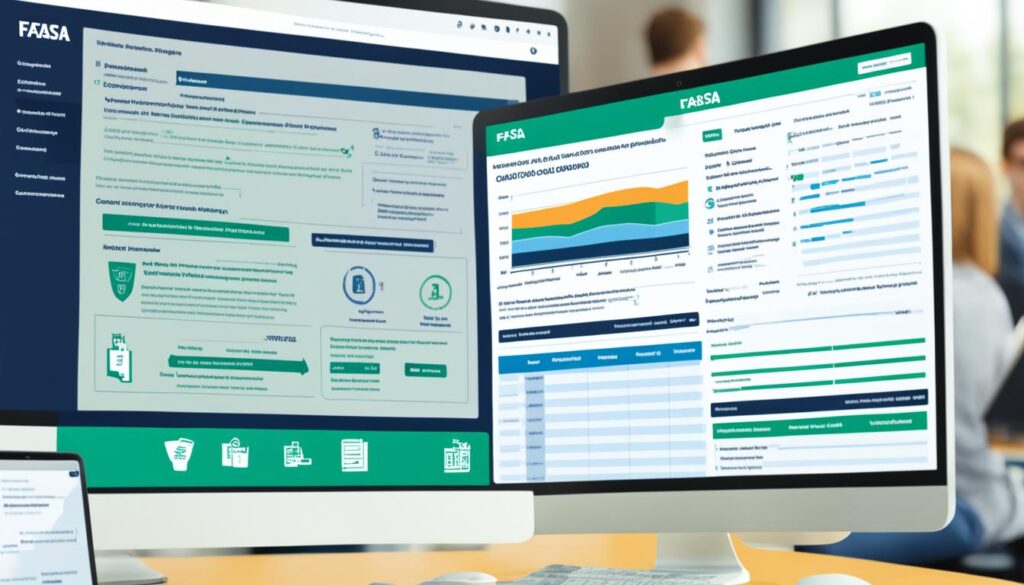
The FAFSA is the first step to getting federal financial aid as an online student. You’ll fill in basic information about yourself and answer questions about your family’s financial strength. Your application will determine your eligibility for financial aid and how much you’ll receive, so make sure you answer correctly. It’s common for online colleges to require a completed FAFSA with a student’s admission application. All students need to create a StudentAid.gov account to complete this free form.
Submitting Applications and Supporting Documents
To complete a FAFSA, you need to submit your Social Security number (or A-Number if you do not hold U.S. citizenship). Also, expect to submit federal income tax returns, with the option to transfer your filing directly from the Internal Revenue Service. The FAFSA form also requires bank statements, income dates, and bank account balances. If you qualify as a dependent student, your parents or legal guardian must submit their financial information.
Maximizing Financial Aid for Your Online Education
Employer assistance initiatives offer tuition support benefits to employees working toward a college degree. This employer-based financial aid option can vary, but assistance can include tuition reimbursement programs and scholarships. These programs not only help students pursue their degrees, but employers who prioritize higher education can offer flexible scheduling to ensure students can keep up with academic obligations.
Exploring Employer Tuition Assistance Programs
Many companies recognize the value of an educated workforce and offer some form of tuition assistance for their employees pursuing online degrees. This can be a valuable resource for you as an online student, potentially offsetting a significant portion of your educational expenses. Be sure to research the specific tuition assistance programs offered by your employer or prospective employers to see how they can support your online education goals.
Seeking Scholarships and Grants for Online Students
Scholarships can provide vital financial assistance for college students, helping them mitigate the burden of tuition and other school-related expenses. Online students can explore scholarships like the GetEducated.com Distance Learning Scholarship, the Study.com Undergraduate Distance Learning Degrees Academic Scholarship, and the Christian Connector Christian College Scholarship. Grants from the federal and state governments, as well as colleges and nonprofits, are another way online students can fund their education without the need for repayment.
Managing Student Loan Borrowing
Student loans are often a necessity for many students, and these borrowed funds help cover tuition, fees, educational costs, and living expenses. While students must repay loans, and interest accrues over time, this financial aid option can dramatically expand access to higher education for students without the means to pay for school. Online students should carefully consider their loan options, prioritizing federal loans over private loans when possible, and develop a plan to manage their student loan borrowing.

Conclusion
Financial aid for online degrees is available through a variety of sources, including federal and private options. Online students can take advantage of grants, scholarships, loans, and work-study programs to fund their education. The key is to thoroughly explore all available financial aid opportunities, complete the FAFSA, and work closely with the financial aid office at your online college to ensure you maximize the funding available to you.
By utilizing the various financial aid options, online students can make their degree programs more affordable and accessible. With the right strategies and a proactive approach, you can secure the necessary funding to pursue your educational goals and achieve success in your online studies.
Remember, financial aid is not a one-size-fits-all solution, so be diligent in researching and applying for the aid that best suits your individual needs and circumstances. By taking the time to understand the available options and following the appropriate steps, you can unlock the financial resources needed to make your online degree a reality.