
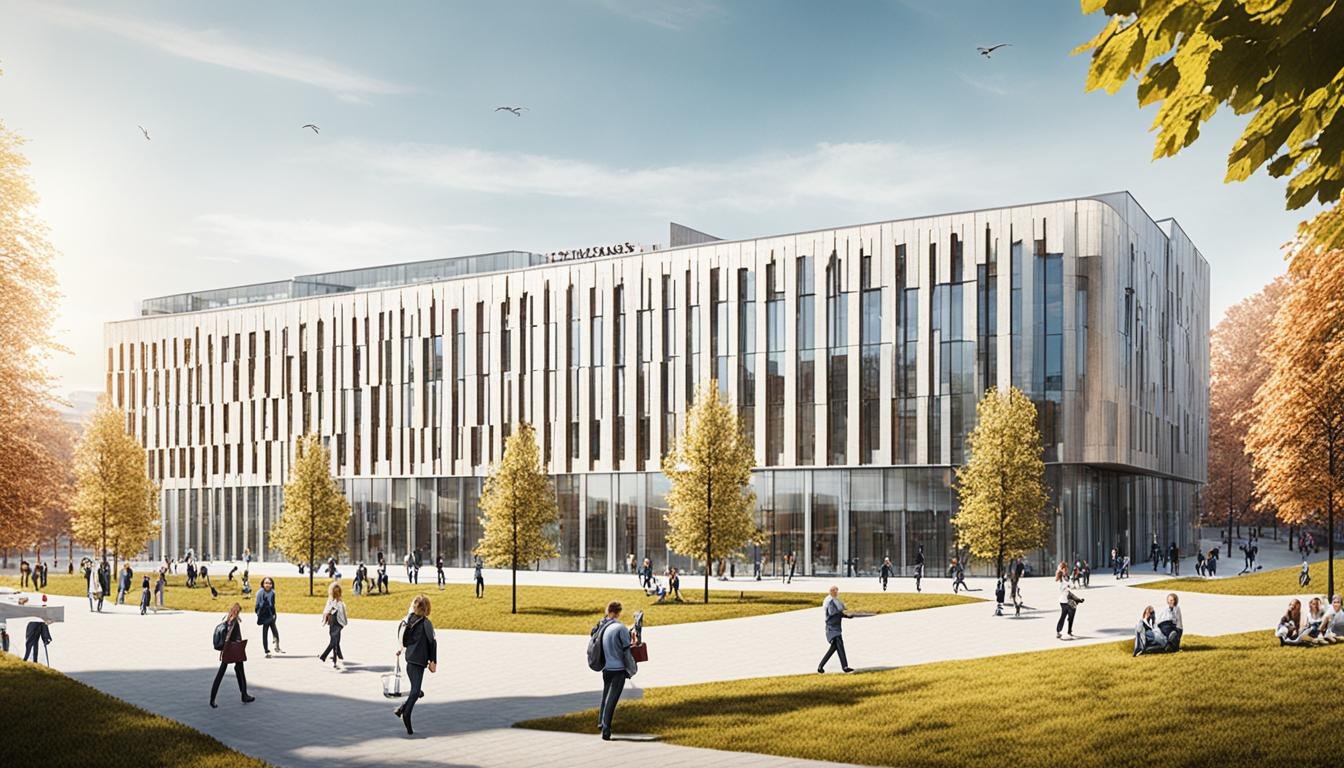
Welcome to our article on the Czech academic landscape and the strategies for higher education success in this promising country. If you’re considering pursuing your studies in a diverse and affordable environment that offers ample job opportunities and economic empowerment, then the Czech Republic should be on your radar.
With a strong international focus and numerous cooperation opportunities, the Czech academic landscape boasts 26 public, 2 state, and 34 private higher education institutions. In 2019 alone, the country welcomed a total of 288,984 students, including 46,429 international students who chose the Czech Republic as their educational destination.
One of the most attractive aspects of studying in the Czech Republic is the affordability factor. Tuition fees for programs delivered in foreign languages range from 0 to $22,350 per year, making it a cost-effective choice. In terms of living costs, students can expect to spend anywhere from $350 to $750 per month, ensuring a comfortable student life without breaking the bank.
Key Takeaways:
- The Czech Republic offers a strategic and affordable option for higher education success
- The country has a diverse range of higher education institutions and study programs
- Tuition fees for programs delivered in foreign languages are affordable, ranging from 0 to $22,350 per year
- Living costs for students range from $350 to $750 per month
- Studying in the Czech Republic opens up job opportunities and contributes to economic empowerment
The Czech Higher Education System
The Czech higher education system has undergone significant changes in recent years, transitioning from a highly centralized and ideologically bound system under the communist regime to a more diversified and decentralized system with full academic freedom.
There are two sectors in the Czech higher education system: tertiary professional schools and higher education institutions (HEIs). Tertiary professional schools offer professionally oriented courses, while HEIs provide education at the bachelor’s, master’s, and doctoral levels.
HEIs can be public, state, or private, and they offer a wide range of study programs in various disciplines.
All degree programs have no exams and no live lectures, and the faculty members are PhD holders from well-known universities.

Internationalization of Czech Higher Education
The Czech higher education system recognizes the significance of internationalization as a strategic priority. The Ministry of Education, Youth and Sports actively promotes academic cooperation and student mobility opportunities to foster a global learning environment. In response to the growing demand, many Czech higher education institutions (HEIs) have introduced study programs in foreign languages, with a special emphasis on English, to accommodate international students.
The number of international students in the Czech Republic has witnessed a substantial increase, reaching 46,429 in 2019. This surge in internationalization initiatives has facilitated cultural exchange, allowing students to immerse themselves in diverse perspectives and experiences. By sharing knowledge and ideas, both Czech and international students contribute to the creation of global networks, bringing together individuals from different backgrounds to inspire innovation and collaboration.

Higher Education Affordability and Economic Empowerment
In today’s competitive world, higher education is a key stepping stone towards a successful and fulfilling career. However, the rising costs of education can often pose a significant barrier for many individuals. Fortunately, the Czech Republic offers an affordable higher education system that prioritizes accessibility and economic empowerment.
When it comes to tuition fees, the Czech Republic stands out as a cost-effective choice. For programs delivered in foreign languages, the fees can range from 0 to $22,350 per year. This affordability makes it an attractive option for students seeking quality education without the burden of excessive financial strain.
But it’s not just tuition fees that make studying in the Czech Republic affordable. The living costs for students, including expenses such as food, accommodation, transportation, and entertainment, range from $350 to $750 per month. This ensures that students can comfortably manage their day-to-day expenses and maintain a good quality of life.
Moreover, the Czech Republic understands the importance of providing comprehensive student support. The country offers various forms of financial aid, such as scholarships, grants, and loans, to help students pursue their educational goals. This commitment to student support ensures that higher education remains accessible to all, regardless of their financial background.

By prioritizing higher education affordability, the Czech Republic enables individuals to embark on a journey of knowledge and personal growth. It not only empowers students to pursue their passions and dreams but also contributes to the overall economic development of the country. Affordable education opens doors to a brighter future, where individuals can thrive and make a positive impact on society.
Conclusion
The Czech academic landscape offers a strategic and dynamic environment for higher education success. With a diverse range of study programs, affordable tuition fees, and a supportive ecosystem, students have ample opportunities to unlock their potential and achieve their academic goals.
In addition, the internationalization efforts in the Czech higher education system provide students with the chance to gain a global perspective, develop cross-cultural skills, and expand their network of connections. The country’s emphasis on academic cooperation and study programs delivered in foreign languages attracts a growing number of international students, fostering cultural exchange and knowledge-sharing.
By prioritizing higher education affordability and economic empowerment, the Czech Republic is leading the way in creating a prosperous future for its students. Through scholarships, grants, and loans, the country ensures that higher education is accessible to all, promoting social mobility and contributing to the overall development of the nation.