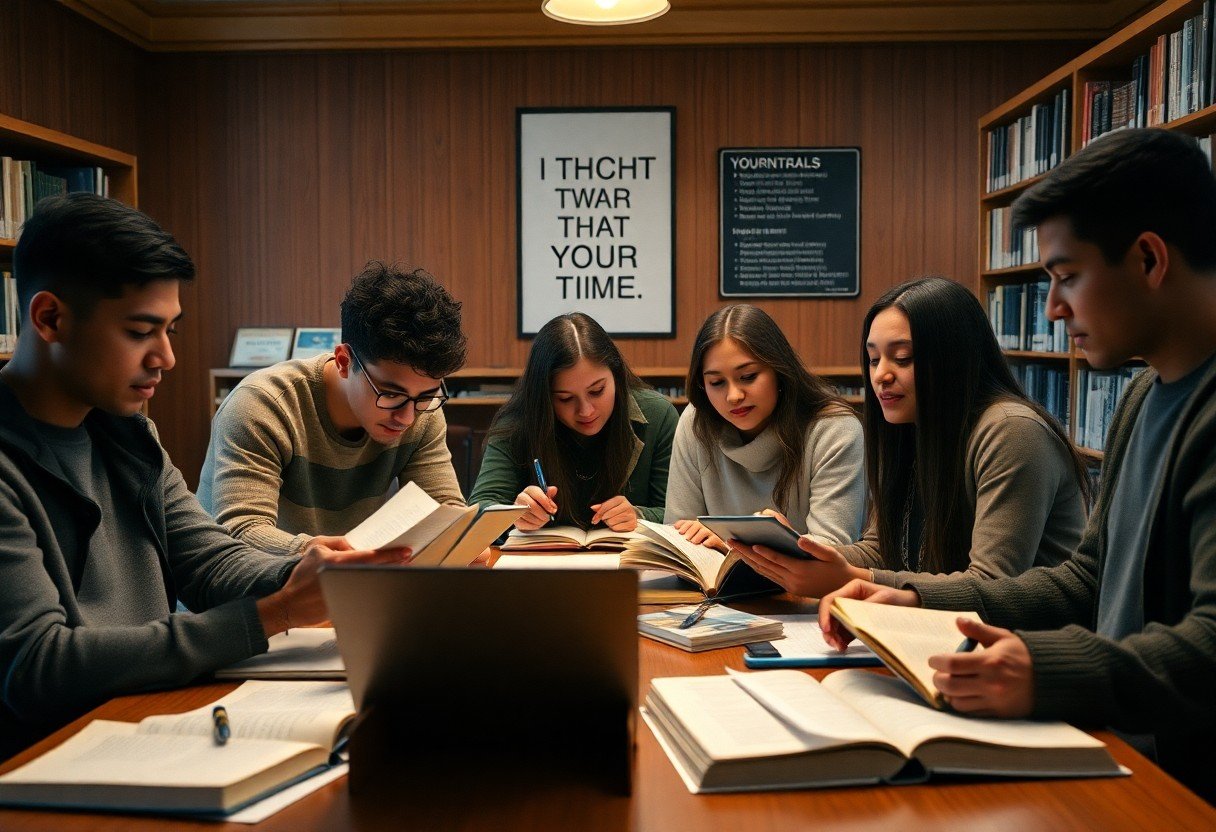

Cooperative Learning (CL) is an instructional strategy that contributes to social integration through collaboration and integration of effective small-groups (Bennett & Rolheiser, 2008). The most complex of CL are strategies and the simpler ones are tactics (Bennett & Rolheiser, 2008). Examples of CL strategies are jigsaw, group investigation, team analysis, and academic controversy. Next, think-pair-share, inside outside circles, and the three-step interview are examples of tactics in CL. According to Sharan (2010), CL is “a pedagogy that generates a diversified body of methods of instruction which organize students ‘to work in groups toward a common goal or outcome, or share a common problem or task in such a way that they can succeeded in complete the work through behavior that demonstrates interdependence, while holding individual contributions and efforts accountable”’.
Marzano (2003) said that structured tasks or effective transfer of knowledge are required by the process of learning. Thus, CL groups are small, structured, and heterogeneous. Certainly, students rely on each other to complete the tasks. In addition, students have accountability, and they promote face-to face interaction in a small group. Dyson, Lynehan, and Hastie (2010) described in their research the instructional ecology of CL in elementary physical education classes and identified four main categories: (a) organization and management of student; (b) roles; (c) skill development; and (d) strategizing. Dyson et al. (2010) defined CL as “an instructional model in which students work together in small, structured, heterogeneous groups to complete group tasks” (p. 113). The definition from Dyson et al. (2010) reinforced the idea of the other authors cited before.
The small groups facilitate the communication between the individuals. In a Canadian elementary school Dyson et al.(2010) wrote that the teacher believed that CL improve students motor skills, developed social skills, helped them work together as a team, and helped others to improve their skills. Interpersonal and small group skills are developed through the tasks that include listening, shared decision making, taking responsibility, giving and receiving feedback, and encouraging each other (Dyson, Linehan, and Hastie, 2010). The process of creating and reorganizing meanings represent the learning process. Effective CL has four steps to follow described by Johnson and Johnson (in Nan & Lee, 2010) or effective CL:
- Specifying the instructional objectives;
- Making pre-instructional decisions;
- Structuring the learning task and positive interdependence; and
- Monitoring and intervening.
Interpersonal Intelligence
The most powerful predictor of whether or not an individual will be successful in life is interpersonal intelligence that CL approach in classroom and school environments (Bennett & Rolheiser, 2008). Nam and Lee (2010) defined interpersonal intelligence as “the ability to understand others’ emotions, belief, and thought” (p. 25). Learner’s characteristics such as cognitive aspects- intelligence and learning styles- and affective aspects–attitudes, values, and motivation-are important to active and to interact among the group members (Nam & Lee, 2010). Mutual help and trust are considered positive interdependence and individual accountability found in CL activities (Nam & Lee, 2010). Interpersonal intelligence encompasses the ability to approach personal issues and opinions of others. Students with higher interpersonal intelligence show positive attitudes in a web-based learning environment. Therefore, Nam and Lee (2010) found that in CL teachers should consider the level of students’ interpersonal intelligence.
Effective Group Work
Johnson and Johnson in 1989 (Goodell, Cooke, & Ash) defined the five conditions of a successful CL: (a) positive interdependence; (b) individual accountability; (c) promotive interaction; (d) interpersonal skills; and (e) group processing. Positive interdependence occurs when individuals working together for success; individual accountability when students contributions are necessary to the group and the responsibility for his/her own learning; promotive interaction through the students working together to teach and learn from each other; interpersonal or social skills are used through the acts to help everyone in a group and for everyone to get along; and group processing access the group’s efforts in terms of their academic performance and collaborative interaction. The group works together with all five conditions in a successful CL. Johnson and Johnson (2009) described conditions for constructive competition, which include “completing the task effectively and perceive one’s participation as being personally worldwide” (p. 370). In some cases, competitiveness is considered positive and some cases negative, which relate to psychological health such as conditional self-esteem and egocentrism. Further, CL has been used for different teachers, subjects, level, cultures, and countries in with effectiveness in almost taken for granted (Johnson & Johnson 2009).
Benefits of CL
According to Shimazoe and Aldrich (2010), CL brings benefits for students in the following areas: (a) promotes deep learning; (b) helps earn high grades; (c) teaches social skills and civic values; (d) teaches higher order thinking skills; (e) promotes personal growth; and (f) develops personal growth. Instructors also get benefits from CL such as giving more time to reflect on how well students are learning and decreasing grade loads. Students and instructors can benefit from CL to express their concerns, problems, and opinions and maintain a positive climate and sense of community. Creating a strong sense of team identity; the actions of helping, encouraging, and supporting are beneficial in engaging the students (Hsiung, 2010). Students who study cooperatively have benefits in their learning performance. CL helps students’ behavior and several studies show that students’ characteristics such as ethnicity and prior knowledge influence their behavior and learning gains (Oortwijn, Boekaerts, Vedder, & Strijbos, 2008).
Strategies of Communication and Using Cloud Computing
Solomon, Heckendom, and Souble (2012) stated that communication is a critical condition to coordinate an individual’s actions; it must be sure that the right information is exchange between individuals at the same time. The communication network plays a critical role and has a significant effect on the success of the process. The teacher needs to assure that the students clearly understand the clearly the task and communicate effectively with each other. Cloud computing technologies enhance the instructional strategies predicted on constructivism and CL (Denton, 2012). As an example Google Docs and Microsoft Office presented this application like file sharing and online publishing that are supporting the Department of Education through the classrooms.
In this case, students can share files and add information to solve the problem. CL is aligned to cloud technologies, where individuals work together to accomplish the goal. This effectiveness of CL in classrooms has being proven by researchers. Denton (2012) describes some strategies to apply cloud computing:
- Group projects;
- Peer assessment;
- Student constructed presentations;
- Simultaneous class discussions;
- Collaborate reflection;
- Assisting writing;
- Learning illustrated;
- Class inventory;
- Collaborative rubric construction; and
- Website publishing.
Certainly, technology has made a lot of contribution to education engaging in different subjects.
Conclusion
CL is a great instructional strategy that enhances the performance of students in classroom settings. It contributes to social, intellectual, and personal individuals’ growth. Each type of CL has methods to develop accountability and trust between the members to accomplish their goals. Adding interpersonal intelligence to perceive others feelings, thoughts, and contributions is a significant aspect to develop a successful CL. Positive results, from students using CL, motivate teachers to use this strategy to develop tasks inside the classroom. Communication is a key to coordinate teams and make the members understand each other the task to be developed. In addition, cloud computing has been applied to help teachers, motivate teams, and engage students in activities that share the technological platform.