
Nestled in the heart of South America’s Atacama Desert lies an unparalleled opportunity for aspiring astronomers. Did you know that the Atacama is home to some of the world’s most advanced astronomical observatories, including the famous Atacama Large Millimeter/submillimeter Array (ALMA) telescope? This arid, high-altitude region offers unrivaled conditions for stargazing and cutting-edge astrophysics research.
The Universidad de Antofagasta, located in the Atacama, is proud to offer a remarkable Astronomy PhD program that immerses students in this exceptional celestial laboratory. Imagine pursuing your doctoral studies amidst the towering Andes Mountains, surrounded by the breathtaking vistas of the Milky Way and countless celestial bodies.
Key Takeaways
- Explore the Atacama Desert, one of the world’s premier stargazing destinations and home to cutting-edge astronomical observatories
- Immerse yourself in cutting-edge research in astrophysics and astroinformatics at the Universidad de Antofagasta
- Access world-class facilities, including the renowned ALMA telescope, to study the wonders of the southern skies
- Enjoy the unique opportunity to pursue your astronomy PhD in the heart of Chile’s thriving astronomical community
- Discover the astro-tourism and desert stargazing experiences that the Atacama region has to offer
Pursue Your Astronomy PhD at the Universidad de Antofagasta
Nestled in the heart of Chile’s Atacama Desert, the Universidad de Antofagasta offers a captivating Doctorate in Astrophysics and Astroinformatics. This cutting-edge program, housed within the university’s Centro de Astronomía (CITEVA), provides an exceptional opportunity for aspiring astrophysicists and astroinformaticians to contribute to the advancement of knowledge in this dynamic field.
Cutting-Edge Research in Astrophysics and Astroinformatics
The program’s curriculum focuses on three core areas: astrophysics of galaxies, astrophysics of stellar systems, and astroinformatics. Students will have the chance to collaborate with a dynamic group of professors, each with active research projects and partnerships with leading institutions around the world.
World-Class Facilities in the Atacama Desert
One of the program’s greatest assets is its access to the Atacama Desert’s world-class astronomical facilities, including the renowned ALMA telescope. This unique location, renowned for its exceptional atmospheric conditions and clear skies, provides students with unparalleled opportunities to conduct cutting-edge astrophysics PhD research in Chile.
Chile: Astronomy PhD Atacama Desert Chile
The Atacama Desert in northern Chile is renowned as one of the world’s premier stargazing destinations. Home to a cluster of cutting-edge astronomical observatories, this unique region offers an unparalleled opportunity for aspiring astronomers to pursue their doctoral studies in a truly remarkable setting.
Explore the Wonders of the Southern Skies
By embarking on an astronomy PhD program in Chile’s Atacama Desert, students will have the privilege of working alongside renowned researchers and utilizing state-of-the-art facilities to unravel the mysteries of the southern hemisphere’s celestial bodies. From the breathtaking Milky Way galaxy to the countless stars and galaxies that dot the night sky, the Atacama’s exceptional conditions make it an ideal location for groundbreaking astrophysics research.
Unique Opportunity in the Heart of Astronomical Observatories
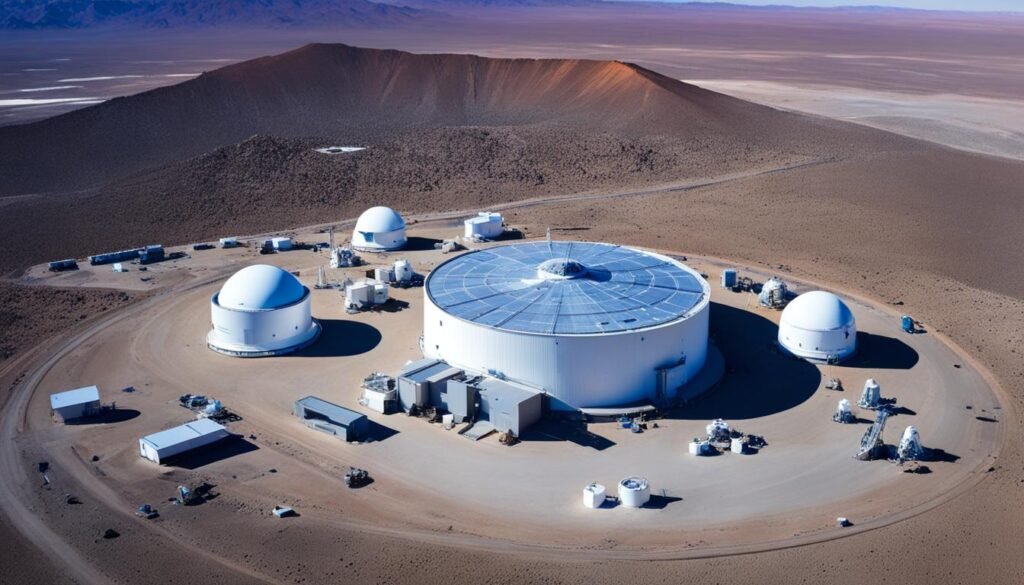
The Atacama Desert is home to some of the world’s most advanced astronomical observatories, including the European Southern Observatory (ESO) and the Atacama Large Millimeter Array (ALMA). By immersing themselves in this hub of celestial exploration, astronomy PhD students will have access to cutting-edge technologies and the guidance of pioneering scientists, elevating their research to new heights.
Admission and Selection Criteria
The Doctorate in Astrophysics and Astroinformatics program at the Universidad de Antofagasta welcomes applicants with a Bachelor’s or Master’s degree in astronomy, physics, mathematics, or a related scientific field. The astronomy phd application requirements include submitting a statement of purpose, academic transcripts, a curriculum vitae, and letters of recommendation.
Prerequisites and Application Process
Candidates interested in the universidad de antofagasta admission process for the atacama desert astronomy program must meet the necessary prerequisites and complete the application steps. The evaluation committee carefully reviews each application to assess the applicant’s academic background, research experience, and motivation for the program.
Evaluation and Interview Rounds
Selected candidates will undergo a comprehensive evaluation, including an interview, to further assess their qualifications. The interview, conducted in English, accounts for 30% of the final score, with the remaining 70% based on the strength of the application materials.

Research Areas and Faculty
The Doctorate in Astrophysics and Astroinformatics program at the Universidad de Antofagasta provides students with the opportunity to delve into three distinct research areas: atacama desert astronomy research, astrophysics of galaxies, and astrophysics of stellar systems. The program boasts a talented and diverse team of faculty members, each with their own areas of expertise, including stellar populations in the Milky Way, variable stars, galaxy evolution, binary and massive stars, exoplanets, and astroinformatics computational techniques.
Astrophysics of Galaxies and Stellar Systems
Students in the Doctorate program can explore the fascinating world of galaxy evolution and the intricate dynamics of stellar systems. From studying the formation and structure of galaxies to unraveling the mysteries of variable stars and binary systems, the faculty’s research spans a wide range of topics in astrophysics of galaxies and stellar systems.
Astroinformatics and Computational Techniques
The program also places a strong emphasis on astroinformatics, equipping students with the latest computational techniques for astronomical data analysis. Faculty members are at the forefront of developing advanced algorithms and software tools to handle the vast amounts of data generated by modern observatories, enabling groundbreaking discoveries in the field of astrophysics.
Program Structure and Curriculum
The Doctorate in Astrophysics and Astroinformatics program at the Universidad de Antofagasta offers a comprehensive curriculum designed to equip aspiring astronomers with the knowledge and skills needed to thrive in the Atacama desert’s captivating astronomical landscape. Spanning over eight semesters, this doctoral program requires the completion of 240 credits, encompassing both fundamental and complementary curricular activities.
During the initial three semesters, students will delve into core courses that deepen their understanding of various research methods, including observing techniques and data analysis. By the end of the third semester, students must present and defend a thesis project, marking a significant milestone as they transition into doctoral candidacy. The final stages of the program focus on the completion and defense of a thesis, which aims to contribute new knowledge to the dynamic field of astronomy.

The university’s doctoral program structure ensures that students receive a well-rounded education, blending theoretical knowledge with practical, hands-on experience. This approach enables them to develop a strong foundation in astrophysics and astroinformatics, preparing them for the challenges and opportunities that await in the Atacama desert’s world-class astronomical observatories.
Funding Opportunities and Scholarships
The Doctorate in Astrophysics and Astroinformatics program at the Universidad de Antofagasta welcomes students who have secured external scholarships from their home countries or research centers. Additionally, the Chilean government, through the National Agency of Scientific Research and Development (ANID), offers scholarships to both Chilean nationals and international students. Successful applicants to the program are strongly encouraged to apply for these ANID doctoral fellowships to support their studies and research in the Atacama Desert.
Chilean Government Grants and External Funding
The ANID doctoral fellowships, known as “ANID Becas Doctorado Nacional,” provide funding for tuition, a monthly living stipend, and research expenses for students pursuing their astronomy phd scholarships chile. These highly competitive awards are open to applicants from around the world, making the Atacama Desert astronomy program funding accessible to international students.
In addition to the ANID fellowships, students may also explore external funding opportunities from their home countries or research institutions. Many organizations and foundations offer grants and scholarships for students pursuing advanced degrees in astronomy and related fields, such as the atacama desert astronomy program funding. By securing these external funding sources, students can focus on their research and studies without the burden of financial worries.
Alumni Success Stories
The Doctorate in Astrophysics and Astroinformatics program at the Universidad de Antofagasta has already produced a cohort of successful graduates, whose research has made significant contributions to the field. These alumni have gone on to publish their findings in prestigious academic journals and present their work at international conferences, showcasing the program’s commitment to excellence and the cutting-edge research being conducted in the Atacama Desert.
Testimonials and Research Highlights
Thallis Pessi, a graduate from Brazil, defended his thesis on “Characterizing the Environments of Core-Collapse Supernovae with MUSE,” while Camilo Gonzalez, a Chilean alumnus, explored “A Multiscale ALMA Study of Protoplanetary Disks in Ophiuchus.” These atacama desert astronomy phd alumni have demonstrated their expertise in astrophysics and astroinformatics research achievements, highlighting the valuable training and research opportunities provided by the universidad de antofagasta doctoral program graduates.
Life in the Atacama Desert
Pursuing an astronomy PhD in Chile’s Atacama Desert is not only an unparalleled academic opportunity but also a chance to immerse oneself in the region’s captivating natural wonders. This arid, otherworldly landscape, known for its stunning salt flats, towering volcanoes, and some of the clearest skies on the planet, has long been a hub for stargazing enthusiasts and adventure-seekers alike.
Students enrolled in the astronomy program at the Universidad de Antofagasta can take advantage of the thriving astro-tourism industry that has blossomed in the Atacama Desert. They can participate in guided stargazing tours, exploring the awe-inspiring cosmos against the backdrop of this otherworldly landscape. From marveling at the Milky Way’s brilliance to discovering the secrets of distant galaxies, the Atacama Desert offers an unparalleled stargazing experience that complements the cutting-edge research opportunities available to astronomy students.
Beyond the academic realm, life in the Atacama Desert presents a unique opportunity to immerse oneself in the region’s rich cultural heritage and vibrant outdoor activities. From hiking through ancient geoglyphs to exploring the salt flats and volcanic formations, students can discover the natural wonders that have long captivated both scientists and adventurers alike. The Atacama Desert’s remote location and diverse ecosystems make it a truly one-of-a-kind destination for those seeking to combine their passion for astronomy with a profound connection to the natural world.
Conclusion
The Doctorate in Astrophysics and Astroinformatics program at the Universidad de Antofagasta is a remarkable opportunity for aspiring astronomers to delve into cutting-edge research amidst the breathtaking Atacama Desert. By leveraging the university’s state-of-the-art facilities and the region’s world-renowned stargazing conditions, students can explore the mysteries of the Milky Way, observe distant celestial bodies, and develop innovative computational techniques to advance the field of astrophysics and astroinformatics.
With a talented and diverse faculty, the program provides a supportive academic environment that fosters collaboration, critical thinking, and the pursuit of groundbreaking discoveries. Whether investigating the dynamics of galaxies, unveiling the secrets of stellar systems, or designing novel data analysis methods, the Doctorate in Astrophysics and Astroinformatics at the Universidad de Antofagasta offers a unique platform for students to make their mark on the astronomical community and contribute to the ongoing exploration of the universe.
For those seeking to embark on an extraordinary academic journey in the heart of Chile’s astronomical research hub, the Atacama Desert presents an unparalleled opportunity to immerse themselves in the wonders of the southern skies and push the boundaries of our understanding of the cosmos.
Source Links
- Doctorate in Astrophysics and Astroinformatics – Centro de Astronomía de la Universidad de Antofagasta – https://www.astro.uantof.cl/educacion/doctorate-in-astrophysics-and-astroinformatics/
- Governing data in modernity/coloniality: astronomy data in the Atacama Desert and the struggle for collective autonomy – http://etheses.lse.ac.uk/4321/
- PhD in Astrophysics: Details – Astronomia UDP – https://astronomia.udp.cl/en/teaching/phd-astrophysics/phd-in-astrophysics-details-2025/